Western style guides assume a t-shirt neckline. Most of us are not wearing one — and a kurta collar changes the answer completely.
Zayr Studio··4 min read
Updated
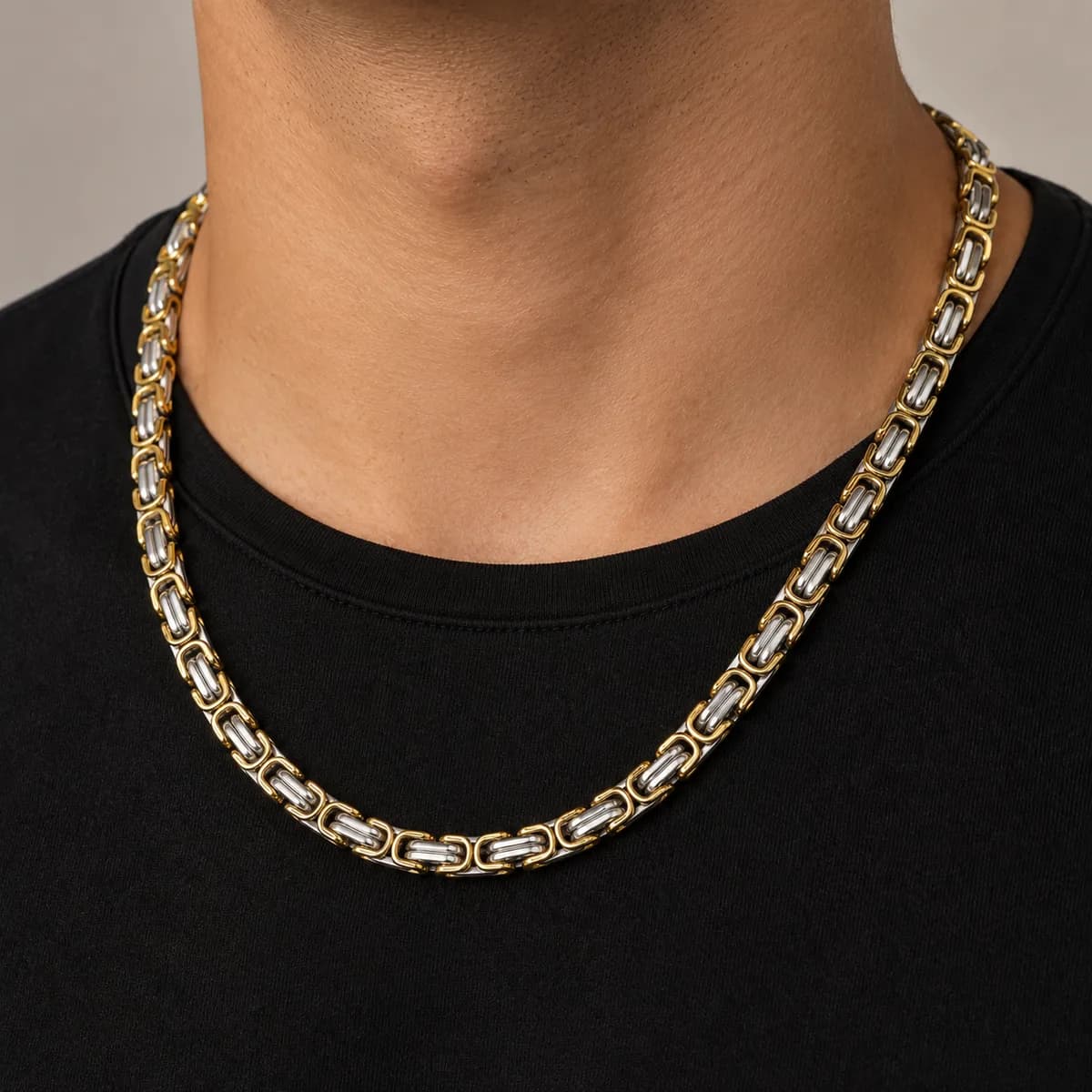
Every chain-length guide on the internet assumes you are wearing a crew-neck t-shirt. Most men in Pakistan are not, most days. A kurta collar sits higher and closer than a t-shirt neckline, a bandhgala closes completely, and a shalwar kameez with the top button open creates a narrow V that a chain either fills correctly or does not.
So the advice changes. Here is what actually works.
Match the length to the neckline
What you are wearing
Chain length
How it reads
Kurta, band collar, top button open
50–55 cm
Sits in the opening. The best-looking option here
Kurta, fully buttoned
45–50 cm
Nothing shows. Wear it for yourself, or skip it
Shalwar kameez, open collar
55 cm
Visible at the V without reaching the chest
Bandhgala or achkan
Do not
It closes to the throat. A chain has nowhere to go
Sherwani
Under it only
The outfit is already doing the talking
Waistcoat over kameez
Common questions
What chain length works with a kurta?
50 to 55 cm. That length sits inside the opening of a band collar when the top button is undone, which is where a chain looks best with traditional dress. Anything longer disappears under the fabric, since a kurta neckline sits higher than a t-shirt's.
Can men wear jewellery with shalwar kameez?
Yes, and rings in particular have been standard men's wear in this region for generations. Keep chains thinner than you would with western casual — 3–4 mm against a plain kurta — because the plain fabric shows metal more clearly than a printed t-shirt does.
How much jewellery should a man wear to a wedding?
Three pieces at most, and two is usually better. Weddings tempt people into adding rather than choosing. Pick heavier versions of what you normally wear rather than more items, keep to a single metal tone, and match it to any metalwork in the outfit itself.
Should I wear a chain with a bandhgala or sherwani?
Not visibly. Both close at the throat, so there is nowhere for a chain to sit, and a sherwani is already carrying the visual weight of the outfit. A ring is the right piece for those, or wear a chain underneath purely for yourself.
Ready when you are
Bank or wallet payment nationwide, exchanges on sizing.
Western style guides assume a t-shirt neckline. Most of us are not wearing one — and a kurta collar changes the answer completely.
Zayr Studio··4 min read
Updated
Every chain-length guide on the internet assumes you are wearing a crew-neck t-shirt. Most men in Pakistan are not, most days. A kurta collar sits higher and closer than a t-shirt neckline, a bandhgala closes completely, and a shalwar kameez with the top button open creates a narrow V that a chain either fills correctly or does not.
So the advice changes. Here is what actually works.
Match the length to the neckline
What you are wearing
Chain length
How it reads
Kurta, band collar, top button open
50–55 cm
Sits in the opening. The best-looking option here
Kurta, fully buttoned
45–50 cm
Nothing shows. Wear it for yourself, or skip it
Shalwar kameez, open collar
55 cm
Visible at the V without reaching the chest
Bandhgala or achkan
Do not
It closes to the throat. A chain has nowhere to go
Sherwani
Under it only
The outfit is already doing the talking
Waistcoat over kameez
Common questions
What chain length works with a kurta?
50 to 55 cm. That length sits inside the opening of a band collar when the top button is undone, which is where a chain looks best with traditional dress. Anything longer disappears under the fabric, since a kurta neckline sits higher than a t-shirt's.
Can men wear jewellery with shalwar kameez?
Yes, and rings in particular have been standard men's wear in this region for generations. Keep chains thinner than you would with western casual — 3–4 mm against a plain kurta — because the plain fabric shows metal more clearly than a printed t-shirt does.
How much jewellery should a man wear to a wedding?
Three pieces at most, and two is usually better. Weddings tempt people into adding rather than choosing. Pick heavier versions of what you normally wear rather than more items, keep to a single metal tone, and match it to any metalwork in the outfit itself.
Should I wear a chain with a bandhgala or sherwani?
Not visibly. Both close at the throat, so there is nowhere for a chain to sit, and a sherwani is already carrying the visual weight of the outfit. A ring is the right piece for those, or wear a chain underneath purely for yourself.
Ready when you are
Bank or wallet payment nationwide, exchanges on sizing.
The general rule: traditional dress wants a slightly shorter chain than western casual, because the neckline sits higher. A 60 cm chain that looks right with a t-shirt disappears under a kurta. The full length guide has the chart if you are measuring from scratch.
Width matters more with traditional dress
A kurta is usually plain fabric, often light coloured, with clean lines. It is a quieter background than a printed t-shirt, and anything you put against it is read more clearly. A 6 mm chain that looks normal with a black tee reads as heavy against a white cotton kurta.
With a plain kurta: 3–4 mm. The fabric is doing nothing, so the chain does not need to compete.
With embroidery or a worked collar: nothing, or a very thin chain under the fabric. Two decorated things at the same neckline fight each other.
With a dark kameez: up to 5 mm. Dark fabric absorbs the visual weight of metal.
With a waistcoat: keep it thin and short. The waistcoat's opening frames the chain and a thick one looks crowded in that frame.
Rings and bracelets with traditional dress
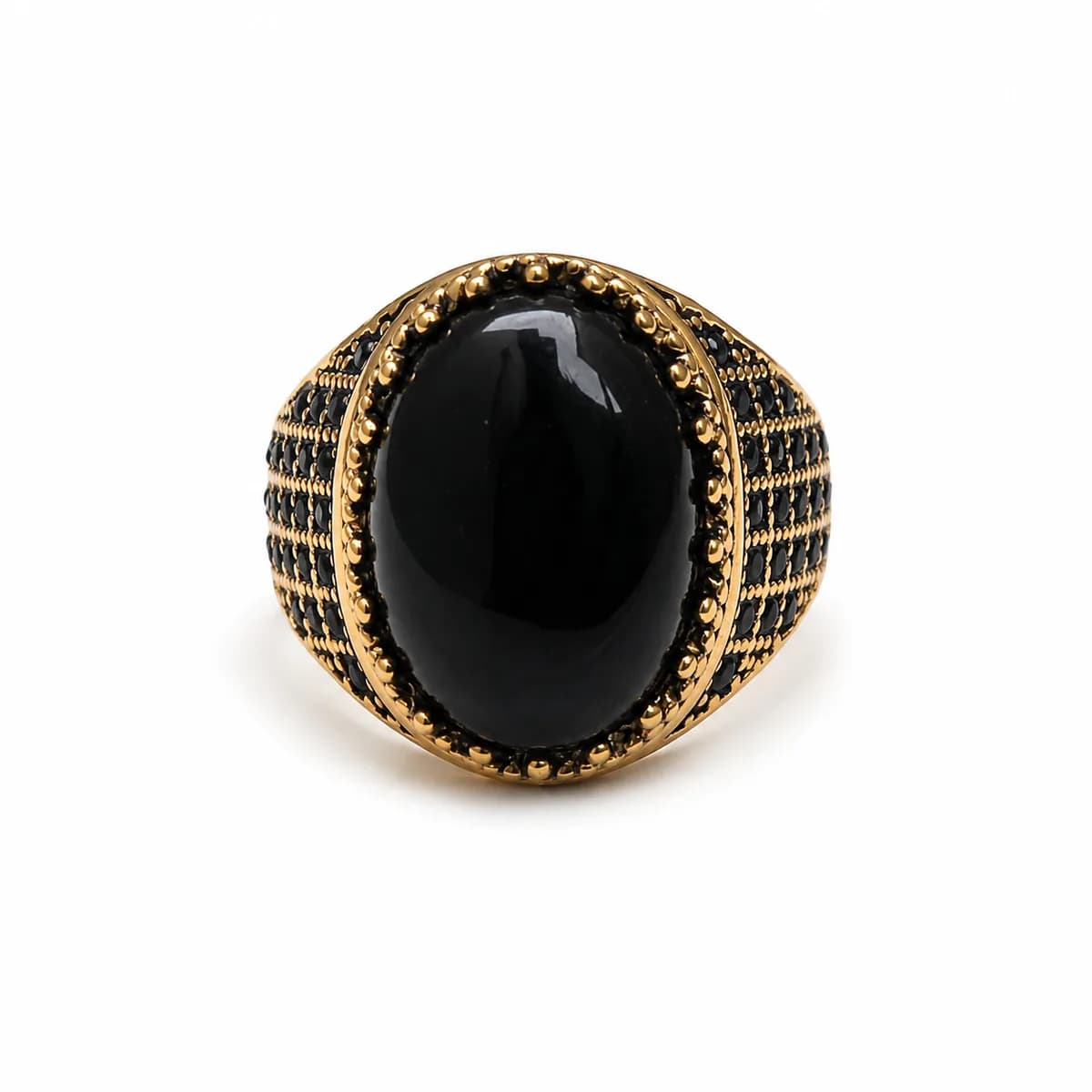
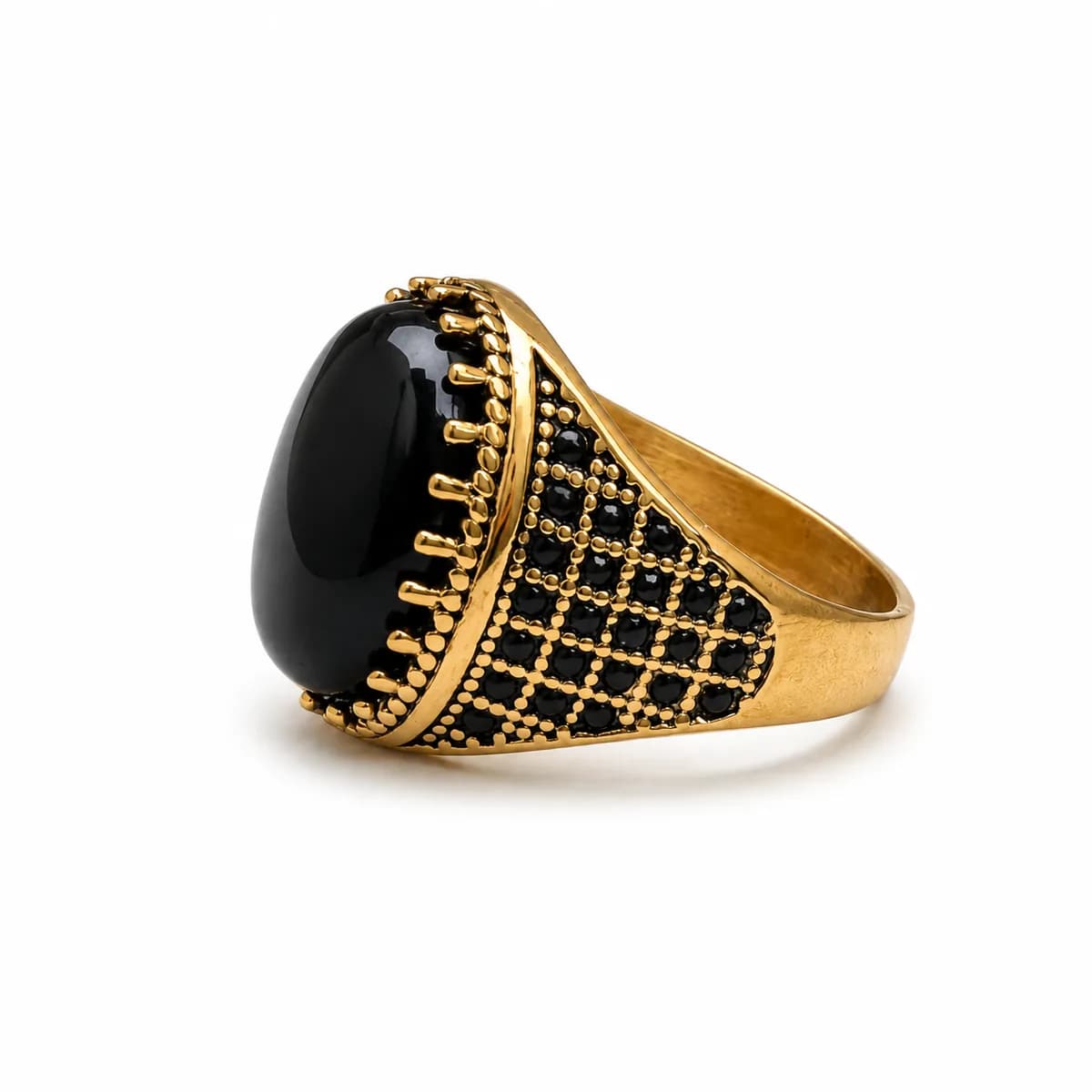
This is easier, because there is a long-standing local grammar for it. A silver ring with a stone on the little or middle finger has been standard men's wear in this region for generations and needs no justification.
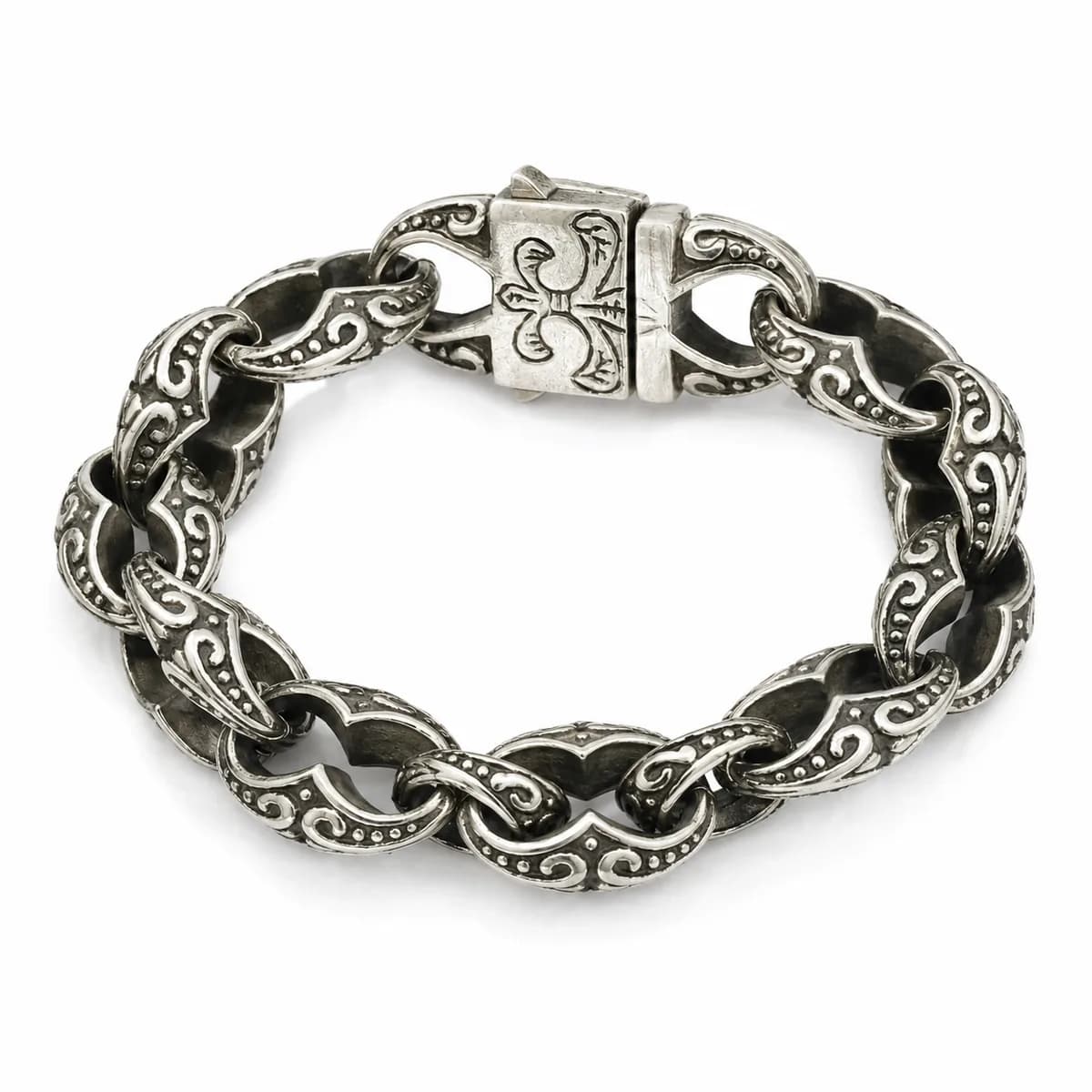
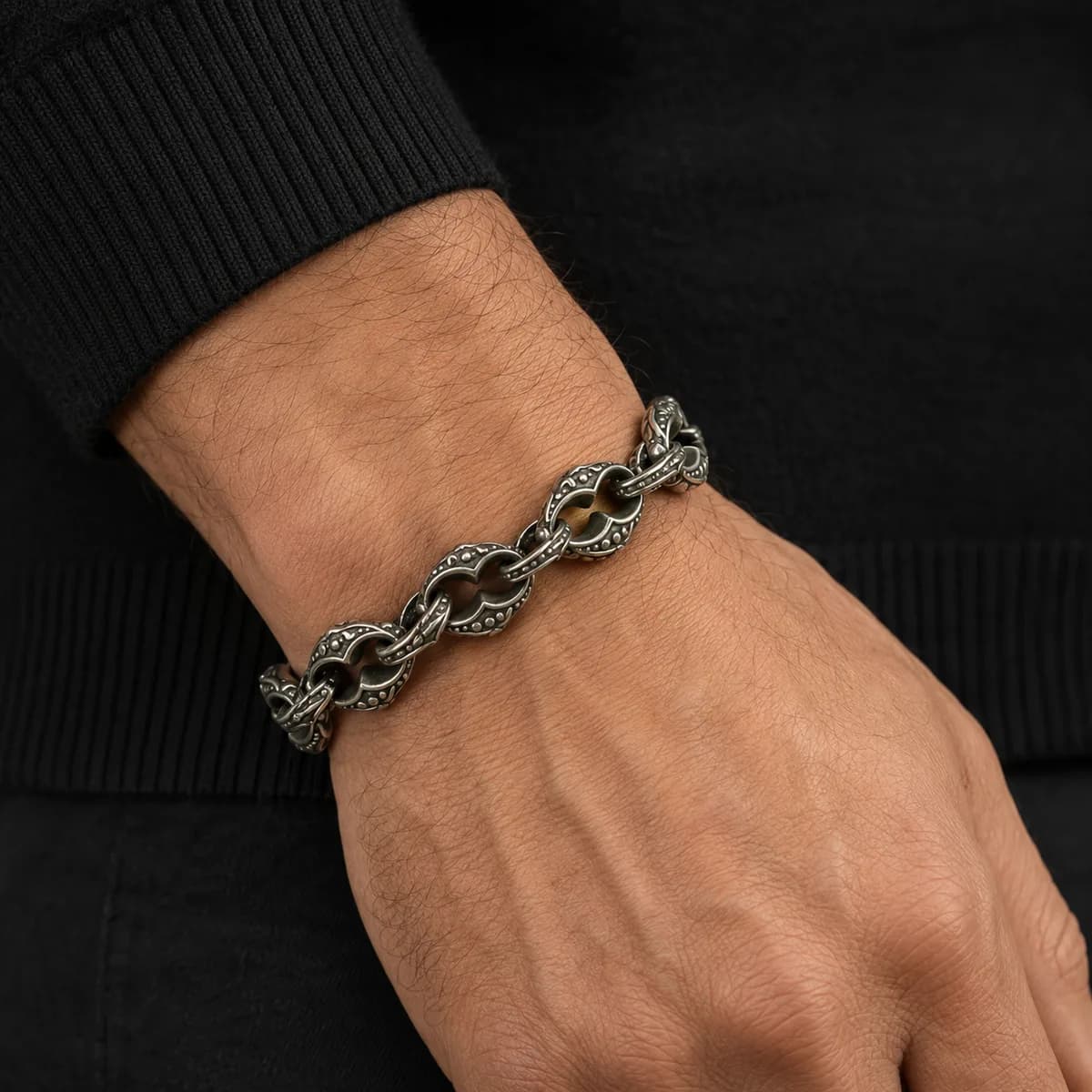
Bracelets are a newer arrival with kurtas and they work, with one adjustment: kurta sleeves are looser than shirt sleeves, so a bracelet spends more of its time hidden and then appears suddenly when you raise your arm. A slightly wider bracelet, 10–12 mm, handles that better than a delicate one, which just looks like something you forgot about.
Shaadi season
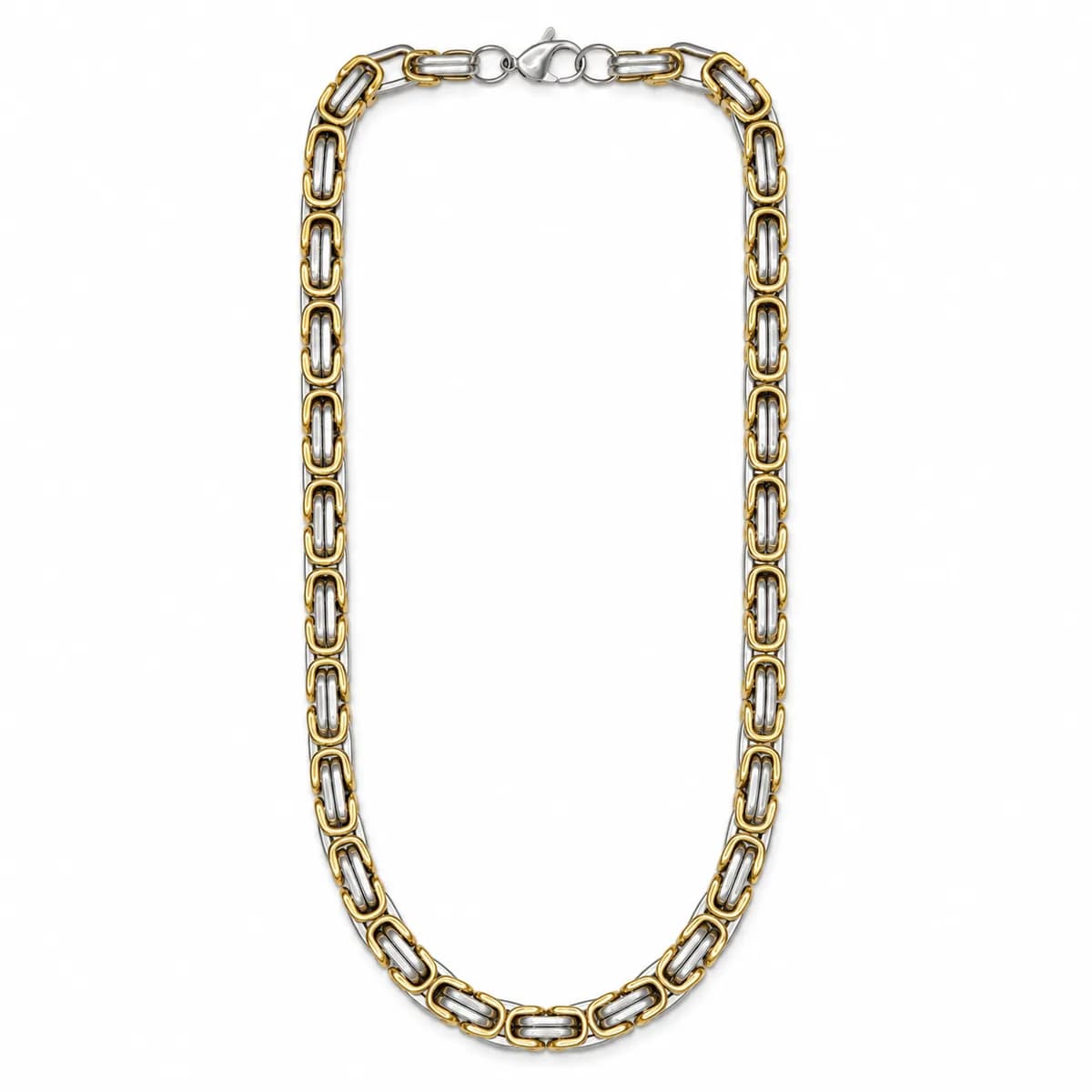
Weddings are where men here wear the most jewellery and where the most goes wrong, because the instinct is to add. The pieces that photograph well are heavier than everyday wear — a 5–6 mm rope chain, a wider ring, a substantial bracelet — but the count should not go up. Three pieces total is the ceiling, and two is usually better.
1Pick one metal tone and stay in it for the whole outfit, including the watch and any buttons.
2If the sherwani or kurta is heavily worked, wear one ring and nothing else. The clothing has the job.
3If the outfit is plain, this is where a rope chain earns its place — it is the style that catches light in photographs.
4Match the metal to the outfit's own metalwork. Silver-toned embroidery with a gold chain is the most common clash at these events.
5Take the gym bracelet off. Rubber and silicone read as sportswear in every photograph you will be in that night.
Practical: chains and traditional fabric
Fine cotton and lawn catch on rough clasps and on prongs. Before wearing a chain with a good kurta, run your thumb over the clasp — anything that snags a fingernail will pull a thread. This is the single most common way an otherwise good chain earns a grudge.
And starch. Heavily starched kameez collars are abrasive against a chain worn underneath, which over a season will dull a polished finish. Not a reason to change anything, just a reason not to be surprised.
With traditional dress the outfit is the statement. Jewellery is punctuation — and nobody puts three exclamation marks in one sentence.
The general rule: traditional dress wants a slightly shorter chain than western casual, because the neckline sits higher. A 60 cm chain that looks right with a t-shirt disappears under a kurta. The full length guide has the chart if you are measuring from scratch.
Width matters more with traditional dress
A kurta is usually plain fabric, often light coloured, with clean lines. It is a quieter background than a printed t-shirt, and anything you put against it is read more clearly. A 6 mm chain that looks normal with a black tee reads as heavy against a white cotton kurta.
With a plain kurta: 3–4 mm. The fabric is doing nothing, so the chain does not need to compete.
With embroidery or a worked collar: nothing, or a very thin chain under the fabric. Two decorated things at the same neckline fight each other.
With a dark kameez: up to 5 mm. Dark fabric absorbs the visual weight of metal.
With a waistcoat: keep it thin and short. The waistcoat's opening frames the chain and a thick one looks crowded in that frame.
Rings and bracelets with traditional dress
This is easier, because there is a long-standing local grammar for it. A silver ring with a stone on the little or middle finger has been standard men's wear in this region for generations and needs no justification.
Bracelets are a newer arrival with kurtas and they work, with one adjustment: kurta sleeves are looser than shirt sleeves, so a bracelet spends more of its time hidden and then appears suddenly when you raise your arm. A slightly wider bracelet, 10–12 mm, handles that better than a delicate one, which just looks like something you forgot about.
Shaadi season
Weddings are where men here wear the most jewellery and where the most goes wrong, because the instinct is to add. The pieces that photograph well are heavier than everyday wear — a 5–6 mm rope chain, a wider ring, a substantial bracelet — but the count should not go up. Three pieces total is the ceiling, and two is usually better.
1Pick one metal tone and stay in it for the whole outfit, including the watch and any buttons.
2If the sherwani or kurta is heavily worked, wear one ring and nothing else. The clothing has the job.
3If the outfit is plain, this is where a rope chain earns its place — it is the style that catches light in photographs.
4Match the metal to the outfit's own metalwork. Silver-toned embroidery with a gold chain is the most common clash at these events.
5Take the gym bracelet off. Rubber and silicone read as sportswear in every photograph you will be in that night.
Practical: chains and traditional fabric
Fine cotton and lawn catch on rough clasps and on prongs. Before wearing a chain with a good kurta, run your thumb over the clasp — anything that snags a fingernail will pull a thread. This is the single most common way an otherwise good chain earns a grudge.
And starch. Heavily starched kameez collars are abrasive against a chain worn underneath, which over a season will dull a polished finish. Not a reason to change anything, just a reason not to be surprised.
With traditional dress the outfit is the statement. Jewellery is punctuation — and nobody puts three exclamation marks in one sentence.