Jewellery trends in Pakistan in 2026, and which ones will last
Five styles you will keep seeing this year, what makes each one work, and an honest guess at which will still look right in three years.
Zayr Studio··5 min read
Updated
The jewellery trends you will see most in Pakistan in 2026 are layered gold-tone necklaces, chunky bangles and cuffs worn in small numbers, pearls mixed with metal, initial and letter pieces, and gold and silver worn together. None of them is brand new. What has changed is how they are worn: fewer pieces, heavier individual ones, and far less concern about matching.
This is not a survey and there are no figures here. It is what is visible on shop shelves, at mehndis and walimas, at university gates and across the feeds people here actually scroll. For each trend, the useful question is not whether it is in, but whether it suits the way you dress and whether it will still look right when the moment passes.
1. Layered gold tones at the neck
Two or three fine chains at different lengths, usually in warm gold tones, sometimes with one small pendant on the longest. It has moved from western outfits to kurtas and co-ord sets, where it sits in the opening of a round or V neckline without fighting embroidery.
What makes it work is spacing and gauge, not the number of chains. Keep about 5 cm between layers and vary the thickness, or the chains read as one tangle. The full method is in our guide on how to layer necklaces.
2. Chunky bangles and cuffs, fewer of them
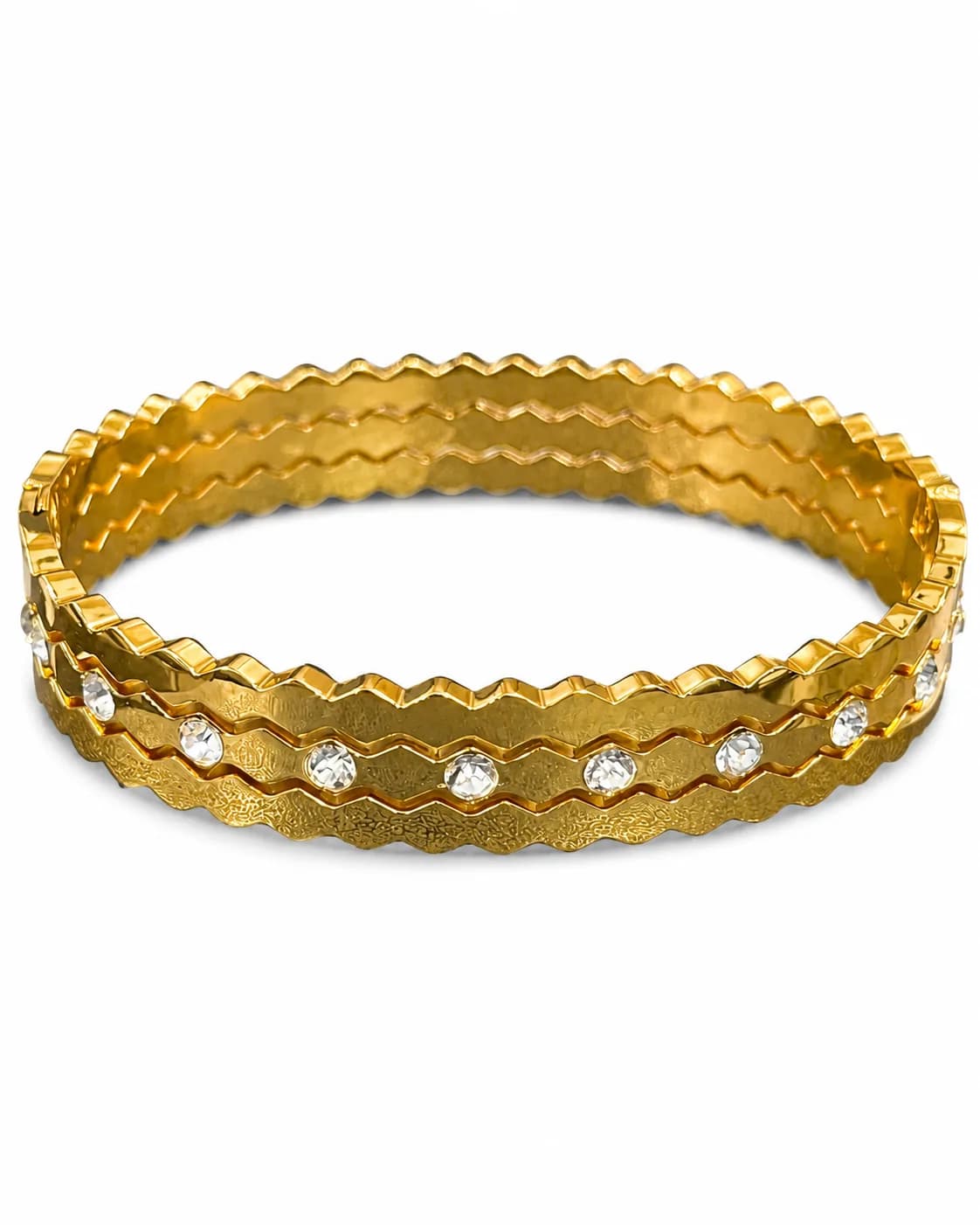
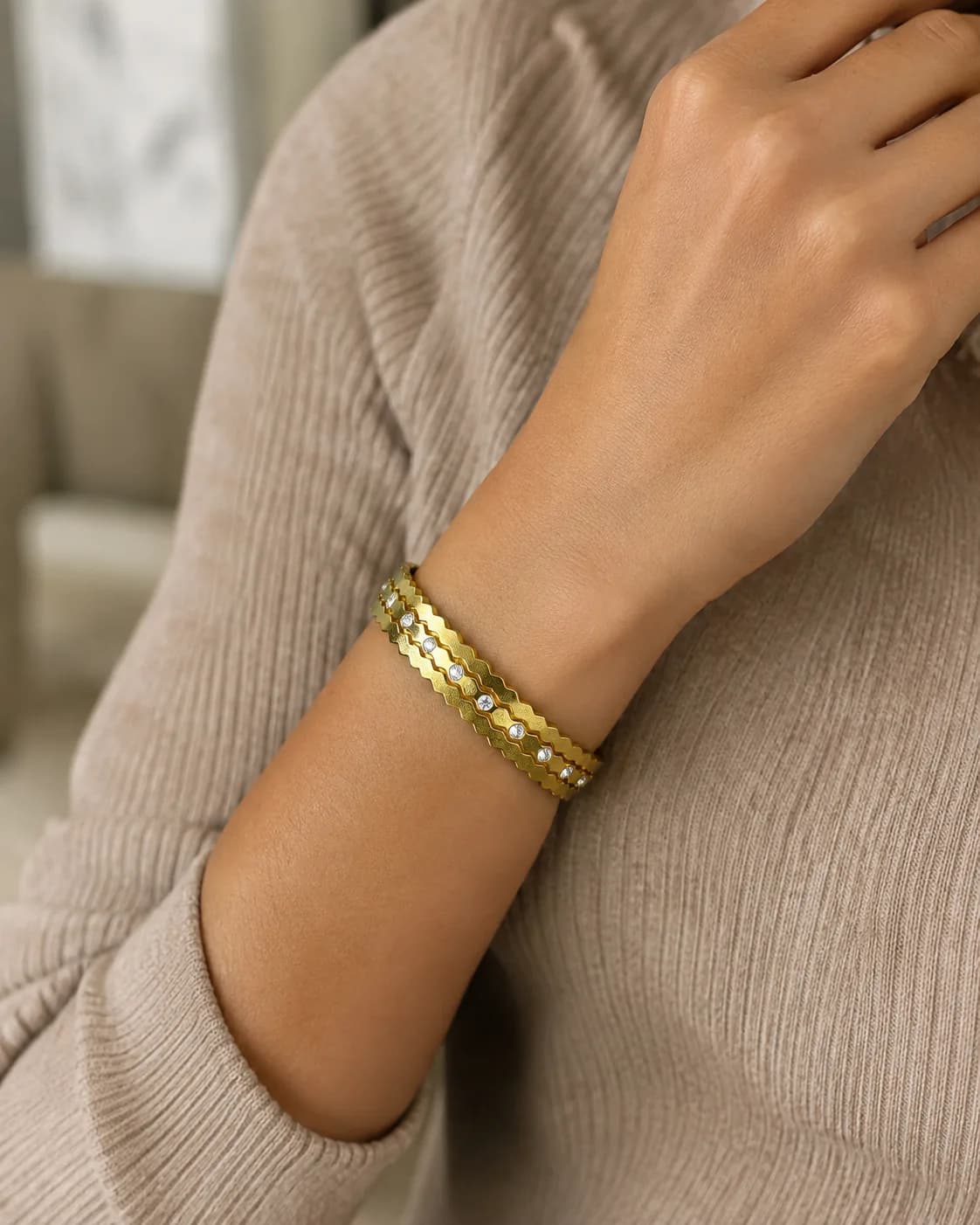
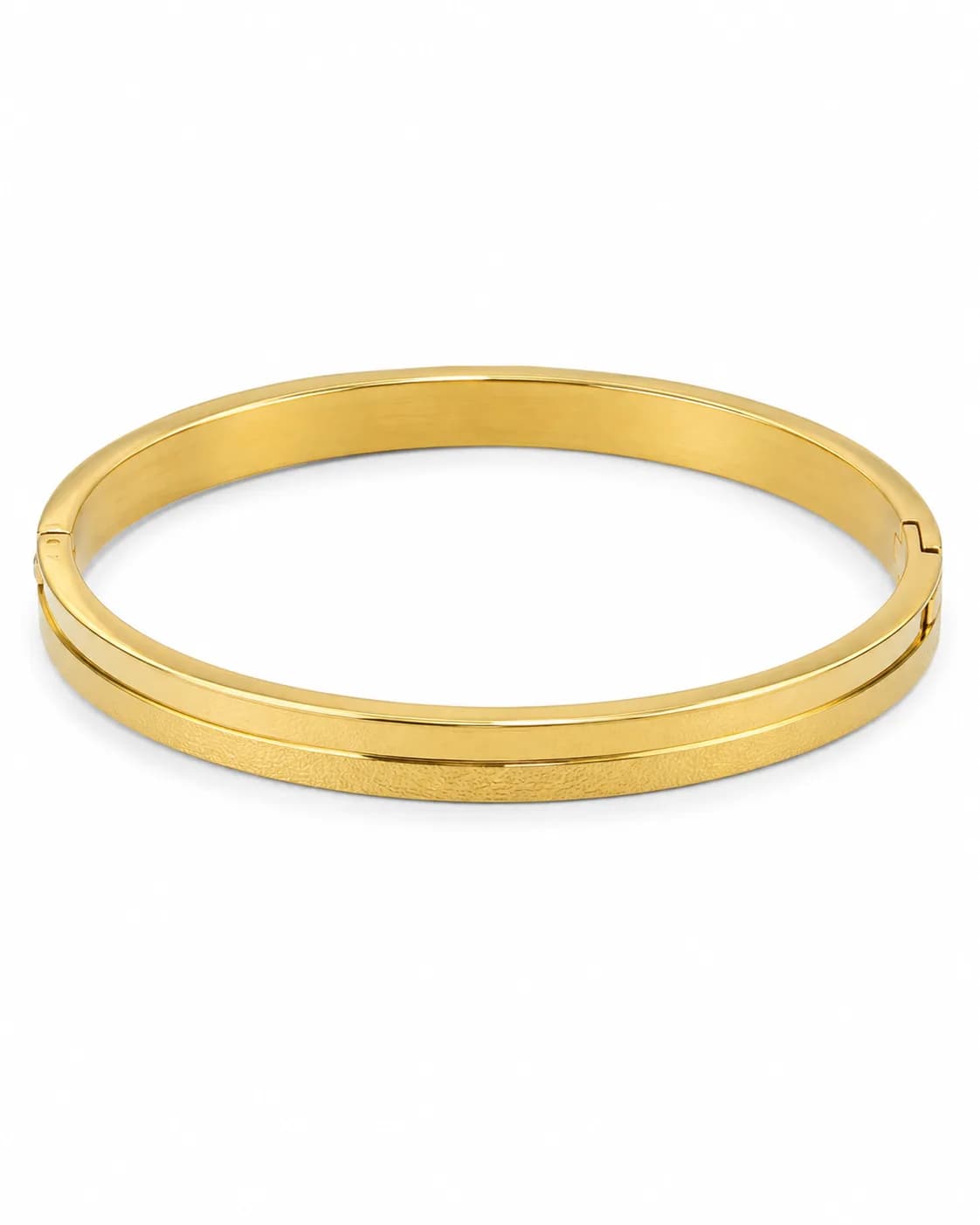
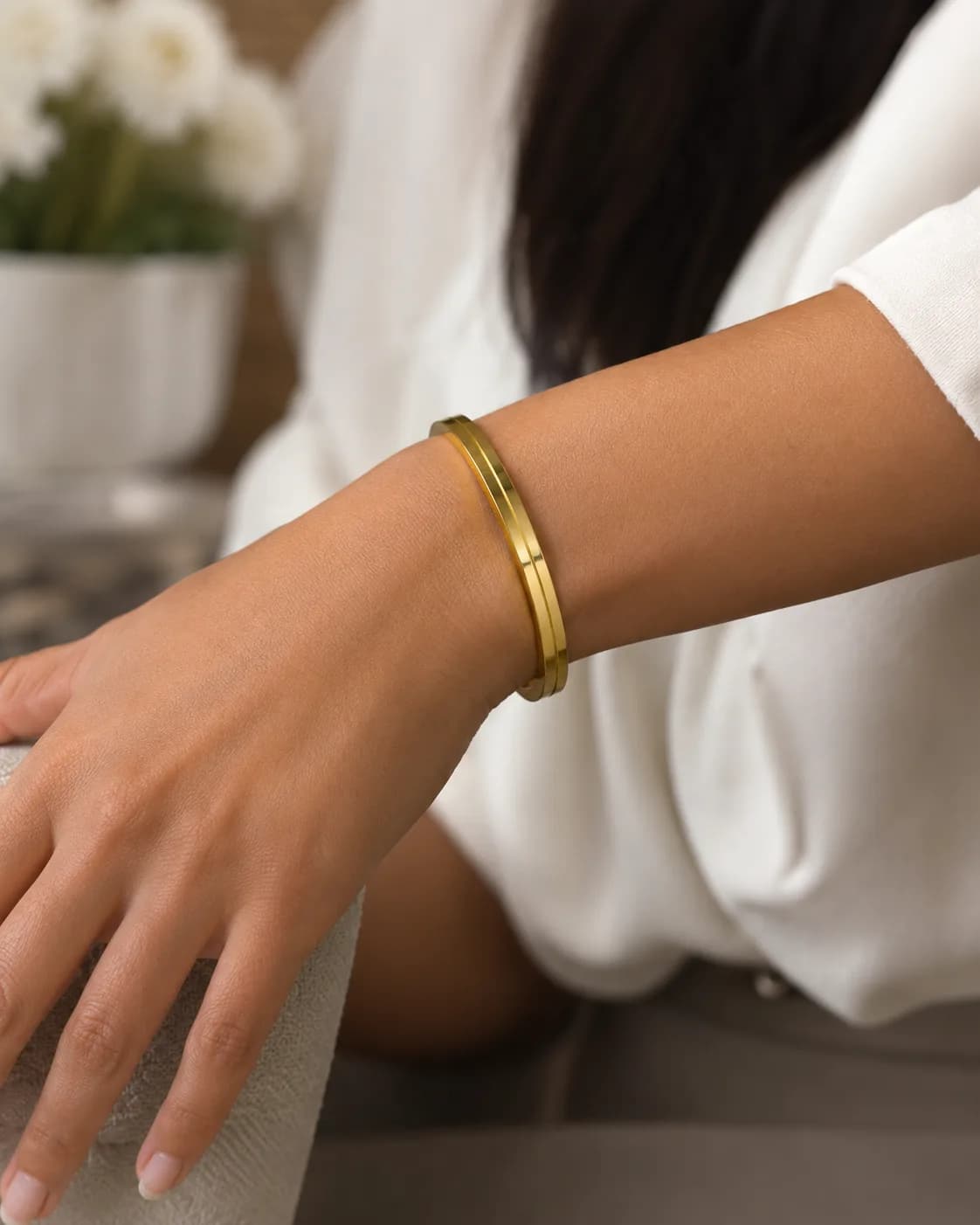
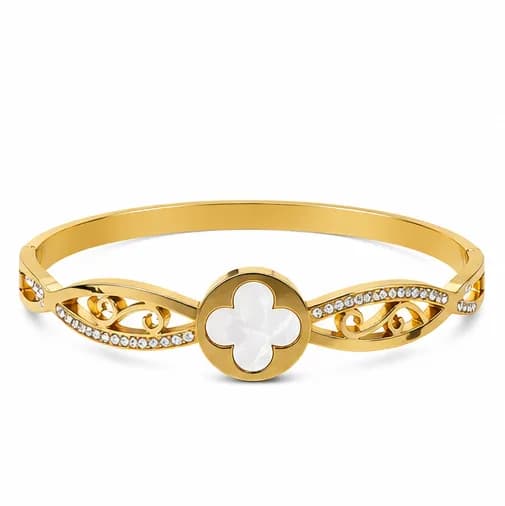
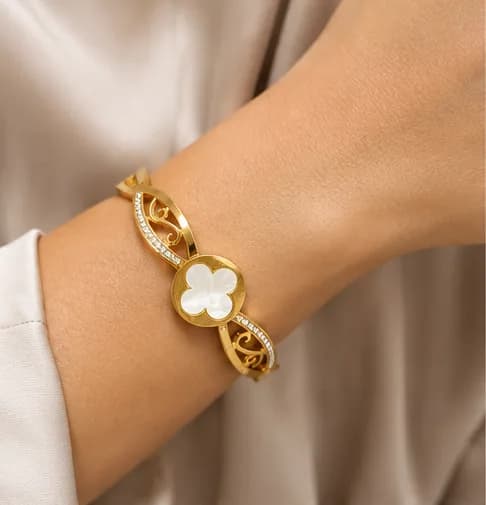
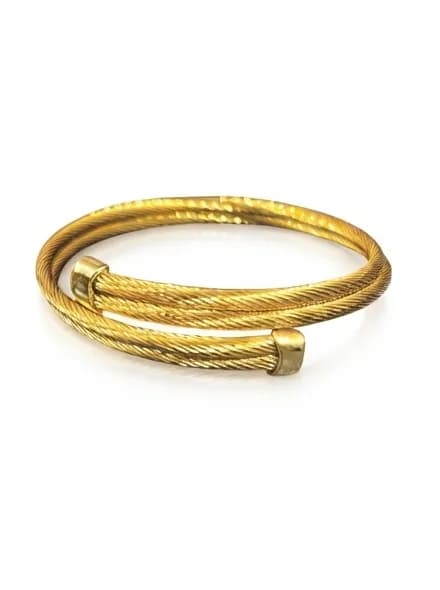
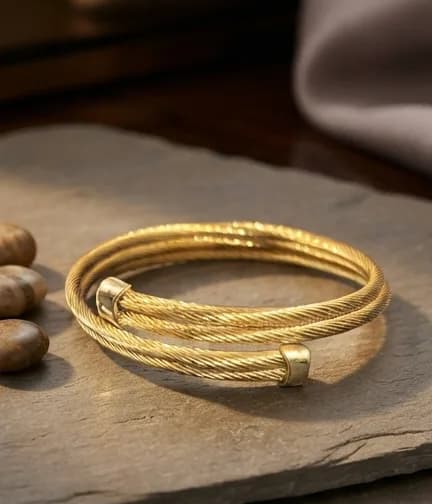
The glass-churi stack is not going anywhere at Eid and weddings, but for everyday wear the look has shifted to one or two wide metal bangles or a single open cuff. Think 8–15 mm rather than 3 mm, worn alone or with a watch. It reads as deliberate with a plain lawn kurta in a way a stack of thin bangles does not.
One wide bangle on the wrist without a watch is the cleanest version.
Two of the same width look like a pair. Two of different widths look like a stack, which needs a third to settle.
Common questions
What jewellery is trending in Pakistan in 2026?
Layered fine chains in gold tones, one or two chunky bangles or cuffs instead of large stacks, pearls mixed with metal, small initial pendants and rings, and gold and silver tones worn together. The common thread is fewer pieces, each one a little bolder.
Are gold and silver together still in fashion?
Yes, mixing metal tones is now ordinary rather than daring. It looks deliberate when each tone appears at least twice, for example gold bangles with a gold chain and silver rings. A single piece in the second tone tends to look accidental.
Which jewellery trend is safest to spend on?
Layered fine chains and small initial pieces, because both have been around for years and each chain or pendant also works on its own. The plain version of any trend usually outlasts the loud one.
Are pearls back in fashion?
Pearls never fully left, but the way they are worn has changed. Instead of a formal single strand, people wear a few small pearls on a fine chain or a single pearl drop, often mixed with gold-tone metal. Most fashion pearls are imitation, so keep perfume off them.
Do trends change for weddings and Eid?
Less than for everyday wear. Glass bangle stacks, heavier sets and traditional pieces still dominate at mehndis, baraats and Eid. The trends in this article show up most in daily wear, university, office and smaller gatherings.
Ready when you are
Bank or wallet payment nationwide, exchanges on sizing.
An open cuff is easier to get on and off for wudu than a closed bangle, which matters if you wear it daily.
Check the inner diameter against your hand, not your wrist. A bangle has to pass over the knuckles.
If you are unsure of your size, the bangle and cuff size guide walks through measuring the widest part of the hand.
3. Pearls, but mixed with metal
Pearls used to mean a formal single strand. The version that keeps showing up now is a few small pearls on a gold-tone chain, a pearl drop on a fine pendant, or a ring with a single pearl beside a band. They soften a heavy outfit and suit pastel walima colours particularly well.
4. Initials and letters
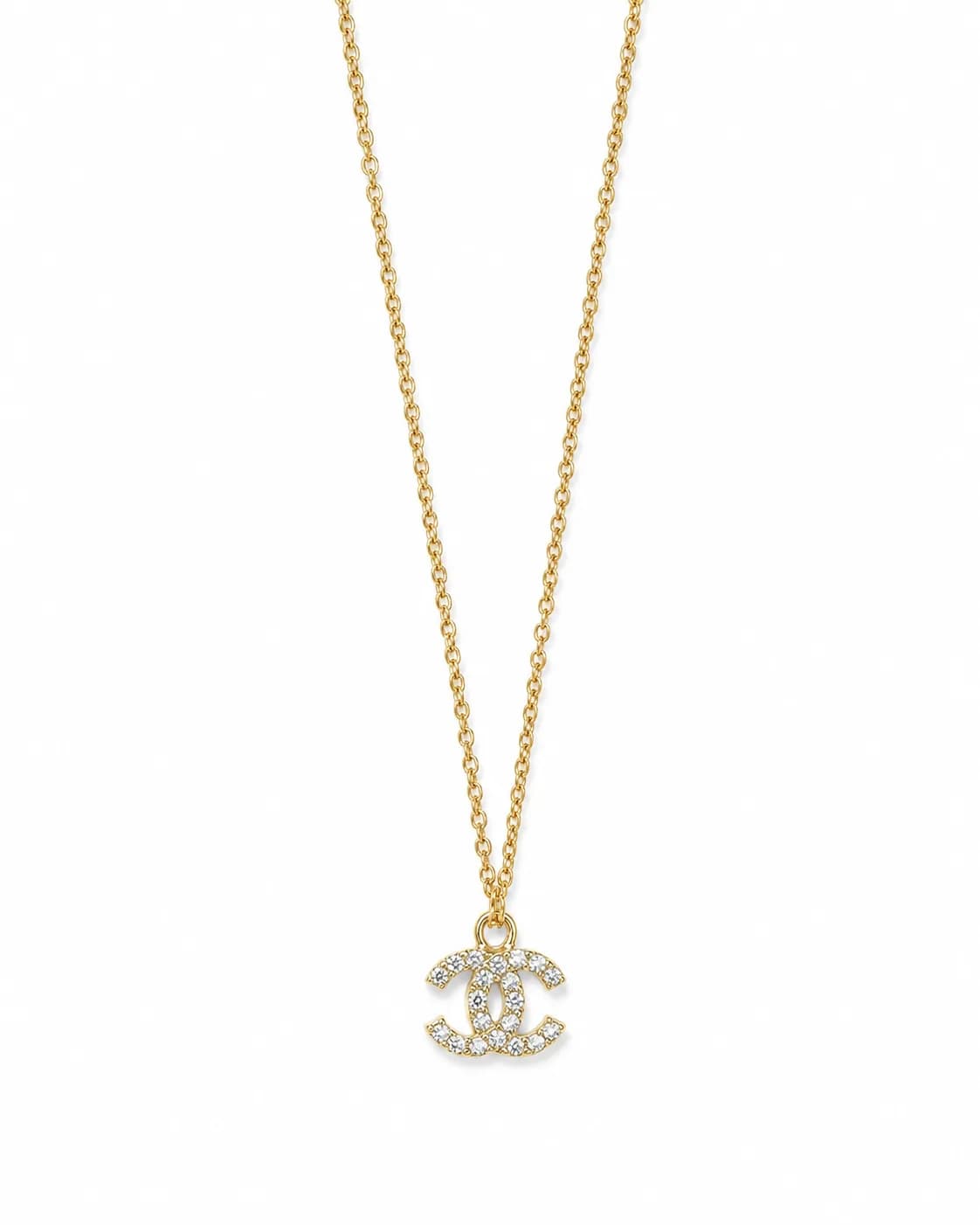
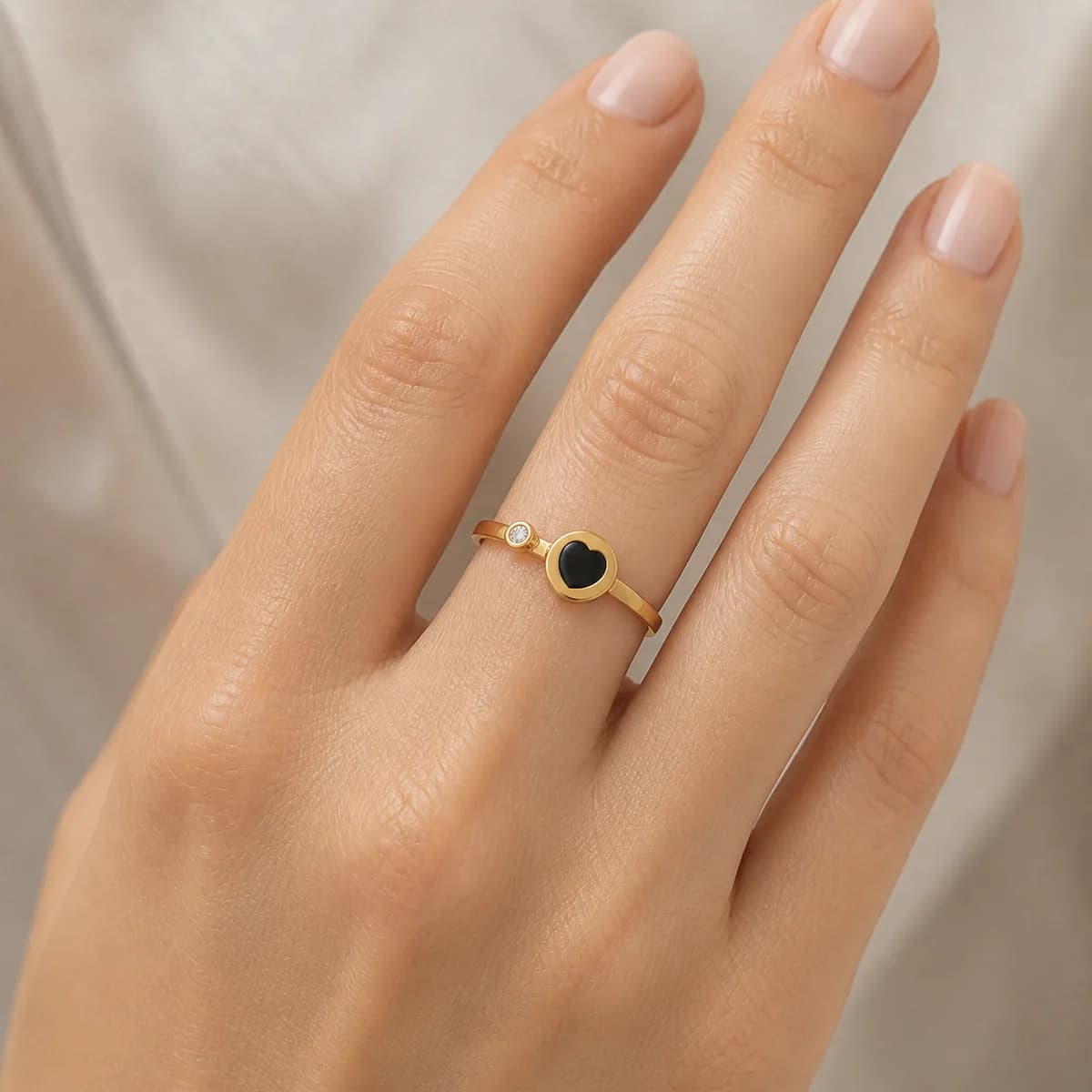
Initial pendants and letter rings have become a standard gift, partly because they solve the problem of buying for someone whose taste you do not know well. The current preference is small and clean: a single letter, sometimes in Urdu script, on a short chain or a slim band, rather than a full name in large cursive.
Worth deciding before you buy: whose initial. Your own reads as personal style. A partner's or child's reads as sentiment, and it tends to be the piece people keep longest.
5. Gold and silver worn together
The idea that you choose a metal and stay in it has quietly gone. A silver-tone ring beside gold-tone bangles, or a two-tone watch with everything, is now ordinary. It works when each tone appears at least twice, so neither looks forgotten. Our piece on mixing gold and silver jewellery has the rule in full.
Which trends are worth buying into
Trend
Likely to last?
Buy this version
Skip this version
Layered fine chains
Yes, it has been around for years
Two plain chains you can also wear alone
A pre-joined three-chain set you cannot separate
Chunky bangles and cuffs
Mostly
One plain wide bangle or open cuff
Very heavy novelty shapes
Pearls with metal
Yes, pearls always come back
Small pearls on gold-tone chain
Oversized pearl chokers
Initial pieces
Yes, as gifts
One small letter, clean font
Large cursive names
Mixed metals
Yes, it is now a habit
One two-tone piece to bridge
Random single pieces of each
The pattern across all five is the same. The plainer version of each trend outlives the louder version, because it keeps working with clothes you already own once the trend has moved on.
What seems to be fading
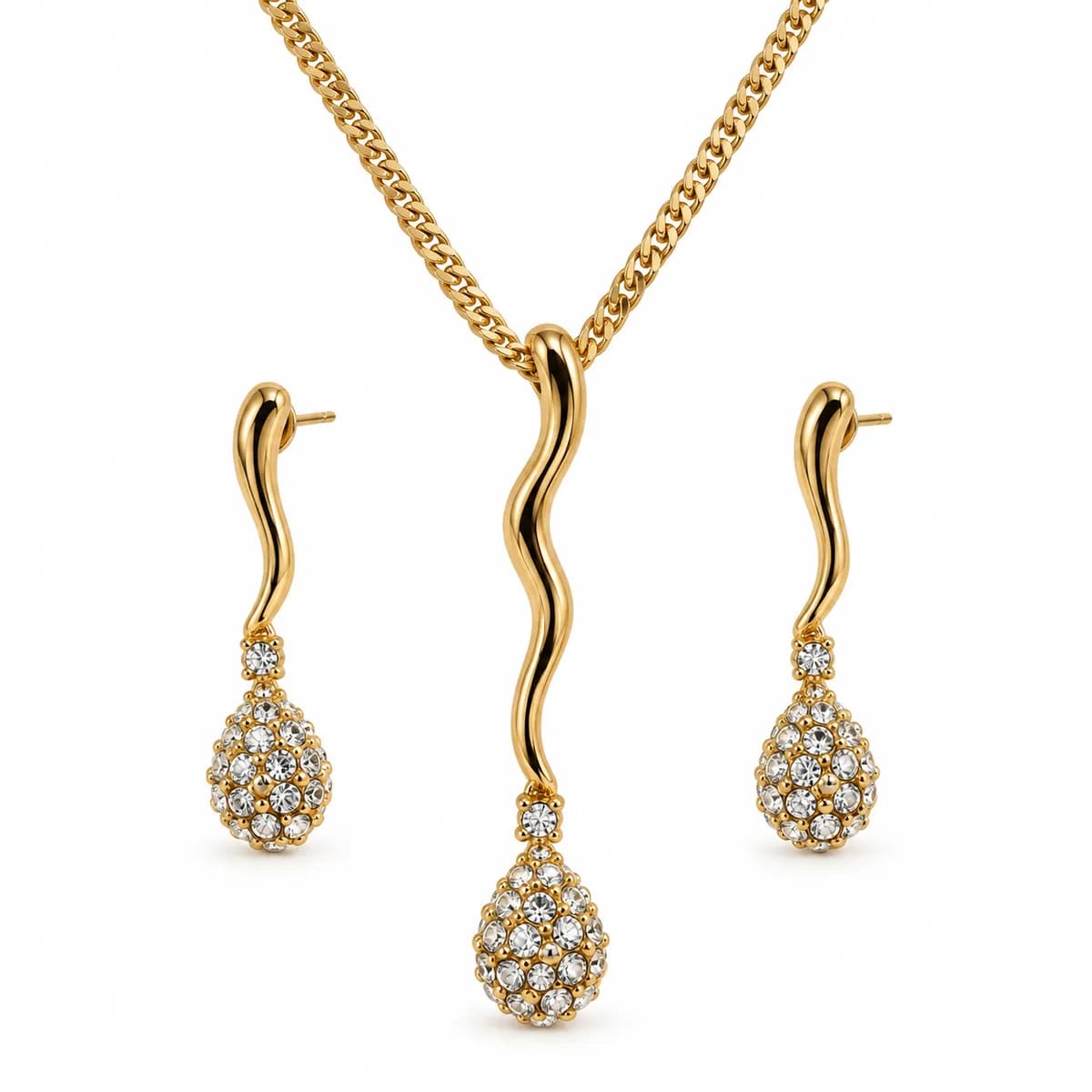
Matching necklace-earring-ring sets for everyday wear. They now read as formal, and people break them up.
Very long single pendants worn over kurtas. Shorter and closer to the collarbone has taken over.
Brightly coloured stones in large clusters for daytime. Clear stones and single colours are showing up more.
Delicate rose-gold-only collections. Rose gold still sells, but mixed with yellow gold rather than on its own.
Following trends without wasting money
1Buy the trend in the piece you wear most. If you live in chains, try layering. If you never wear necklaces, a layered set will sit in a drawer.
2Choose finishes that survive heat. Plated pieces worn daily in a Pakistani summer wear faster than the trend does.
3Keep one piece per trend at first. A single wide bangle tells you whether you like the look before you buy three.
4Check the exchange window before ordering anything you are unsure about, so a trend that does not suit you is not a sunk cost.
Zayr accepts bank transfer, JazzCash or Easypaisa before dispatch. Use the server-calculated amount and payment reference at checkout, then submit your transaction/reference ID for review. Orders are confirmed after receipt is verified, and delivery is Rs.280 per order below Rs.5,000, and free at Rs.5,000 or more after discounts.
A trend is worth following when the quiet version of it would still look right in a photograph three years from now.