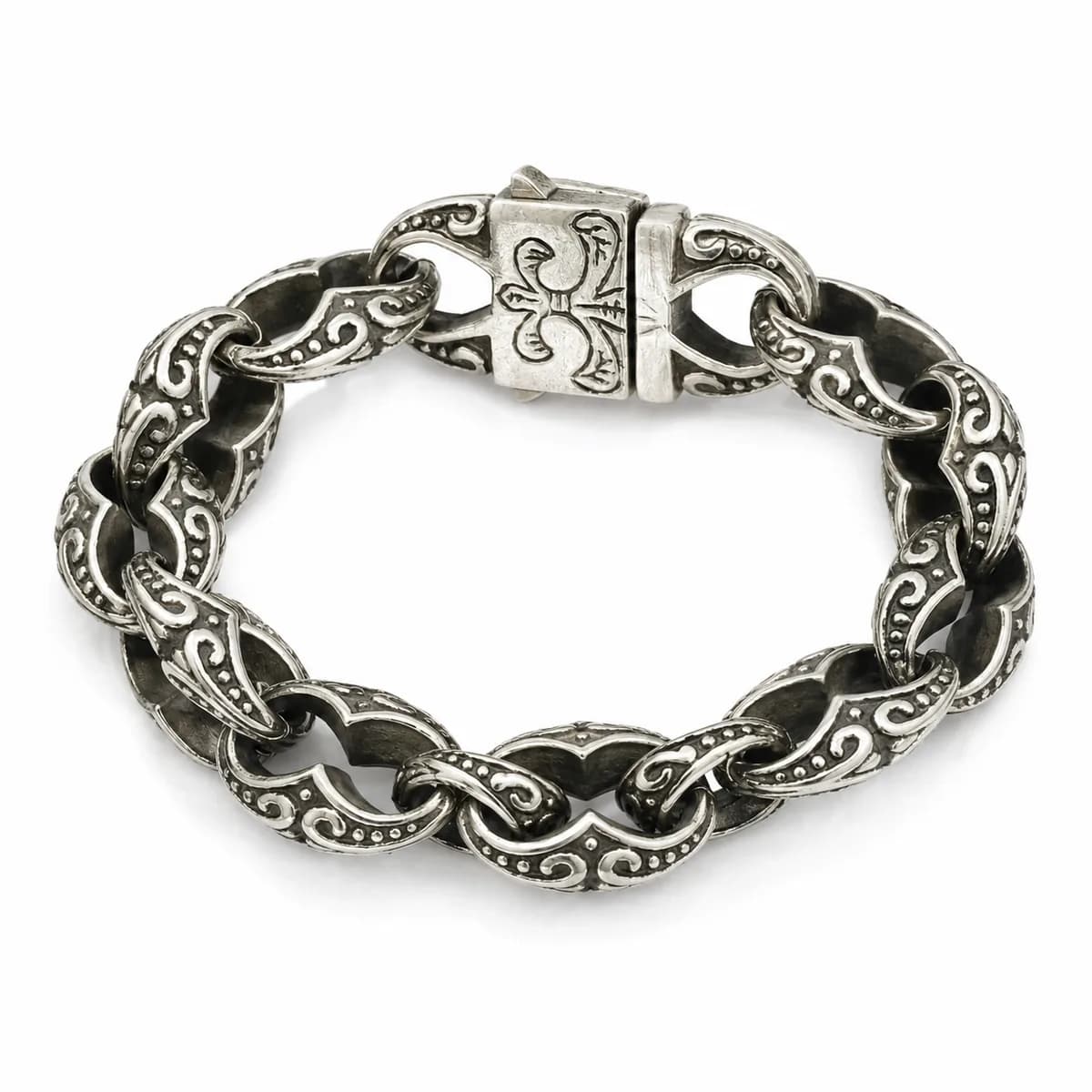
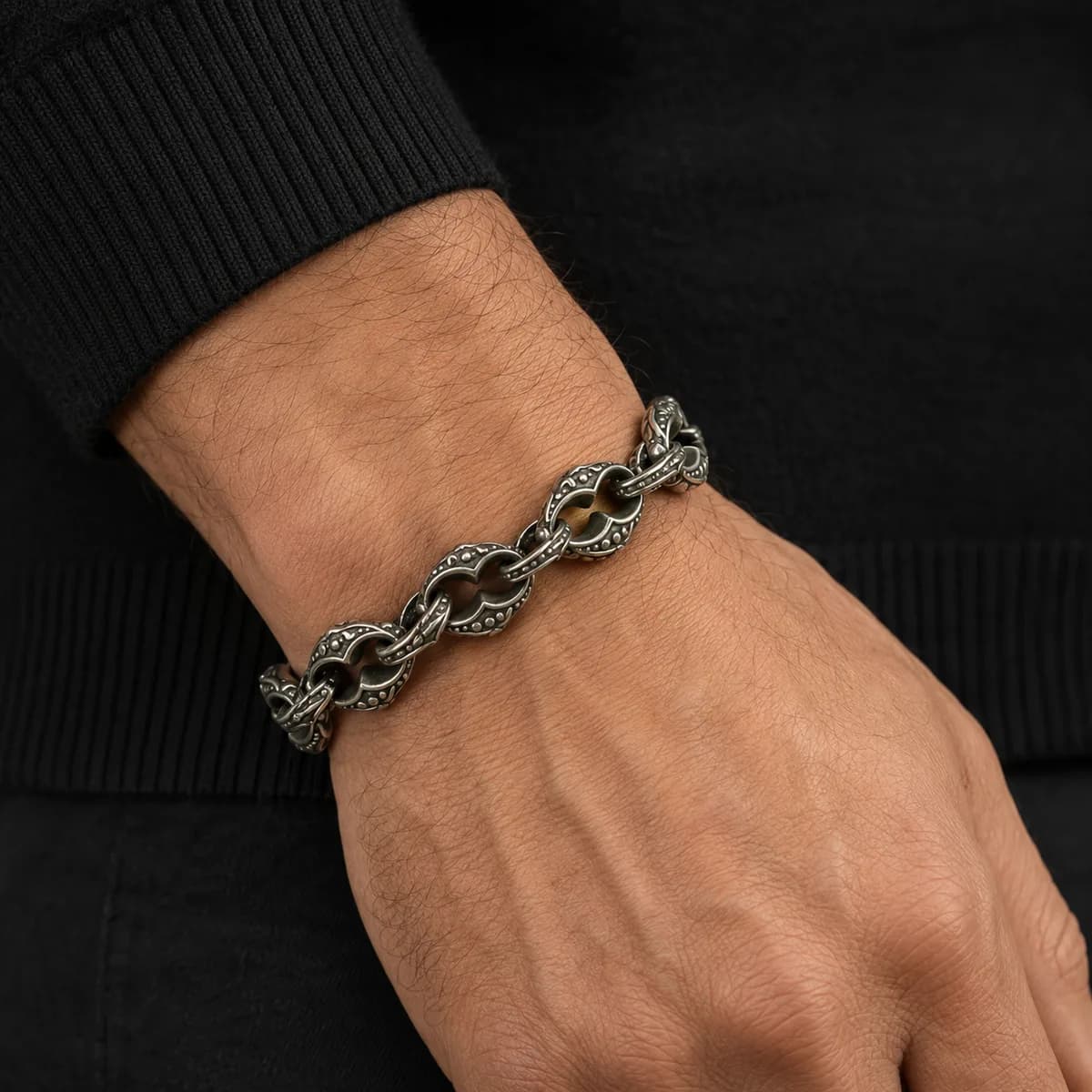
Stainless steel vs gold plated: which one should you actually buy?
One survives the shower. The other looks better in photographs. Here is how to pick without regretting it in six months.
Zayr Studio··4 min read
Updated
Every customer who has ever been disappointed by a piece of jewellery was disappointed for one of two reasons: it did not last, or it did not look the way they pictured it. Steel and gold plate sit on opposite sides of that split. Neither is better. They are answers to different questions.
What you are actually comparing
Stainless steel is a solid alloy the whole way through. Cut a 316L chain in half and the inside looks like the outside. There is nothing to wear off, because the colour is the metal.
Gold plated means a base metal — usually brass, sometimes steel — with a microscopically thin layer of real gold bonded on top. The layer is measured in microns. A cheap flash plating is 0.5 microns, about a hundredth of the thickness of a sheet of paper. Good plating is 2–3 microns. Either way, it is a coating, and coatings wear.
Head to head
316L stainless steel
Gold plated brass
Lifespan of the finish
Indefinite — it is the metal
6 months to 3 years depending on microns and wear
Water
Fine. Shower, swim, wudu, rain
Avoid. Water is the main killer
Turns skin green
Common questions
Is stainless steel jewellery good quality?
316L stainless steel is a genuinely good material for everyday jewellery — it does not tarnish, does not react with skin, resists scratches and survives water. It is not a precious metal and has no resale value, so it is a wearing choice rather than an investment one.
How long does gold plated jewellery last?
Between six months and three years, depending on plating thickness and how you treat it. Flash plating at 0.5 microns worn daily can start showing wear inside a few months; 3-micron plating kept away from water and perfume can hold for years.
Can you shower with stainless steel jewellery?
Yes. 316L steel is unaffected by water, soap and chlorine. It is one of the main practical reasons to choose it. Gold-plated brass should be kept dry.
Which is better for daily wear in Pakistan's climate?
Stainless steel, by a wide margin. Heat and humidity mean more sweat, and sweat is what strips plating and oxidises brass. A steel piece with a PVD finish handles a Lahore or Karachi summer without any special care.
Ready when you are
Bank or wallet payment nationwide, exchanges on sizing.
Stainless steel vs gold plated: which one should you actually buy?
One survives the shower. The other looks better in photographs. Here is how to pick without regretting it in six months.
Zayr Studio··4 min read
Updated
Every customer who has ever been disappointed by a piece of jewellery was disappointed for one of two reasons: it did not last, or it did not look the way they pictured it. Steel and gold plate sit on opposite sides of that split. Neither is better. They are answers to different questions.
What you are actually comparing
Stainless steel is a solid alloy the whole way through. Cut a 316L chain in half and the inside looks like the outside. There is nothing to wear off, because the colour is the metal.
Gold plated means a base metal — usually brass, sometimes steel — with a microscopically thin layer of real gold bonded on top. The layer is measured in microns. A cheap flash plating is 0.5 microns, about a hundredth of the thickness of a sheet of paper. Good plating is 2–3 microns. Either way, it is a coating, and coatings wear.
Head to head
316L stainless steel
Gold plated brass
Lifespan of the finish
Indefinite — it is the metal
6 months to 3 years depending on microns and wear
Water
Fine. Shower, swim, wudu, rain
Avoid. Water is the main killer
Turns skin green
Common questions
Is stainless steel jewellery good quality?
316L stainless steel is a genuinely good material for everyday jewellery — it does not tarnish, does not react with skin, resists scratches and survives water. It is not a precious metal and has no resale value, so it is a wearing choice rather than an investment one.
How long does gold plated jewellery last?
Between six months and three years, depending on plating thickness and how you treat it. Flash plating at 0.5 microns worn daily can start showing wear inside a few months; 3-micron plating kept away from water and perfume can hold for years.
Can you shower with stainless steel jewellery?
Yes. 316L steel is unaffected by water, soap and chlorine. It is one of the main practical reasons to choose it. Gold-plated brass should be kept dry.
Which is better for daily wear in Pakistan's climate?
Stainless steel, by a wide margin. Heat and humidity mean more sweat, and sweat is what strips plating and oxidises brass. A steel piece with a PVD finish handles a Lahore or Karachi summer without any special care.
Ready when you are
Bank or wallet payment nationwide, exchanges on sizing.
The PVD wrinkle, which is the part most people miss
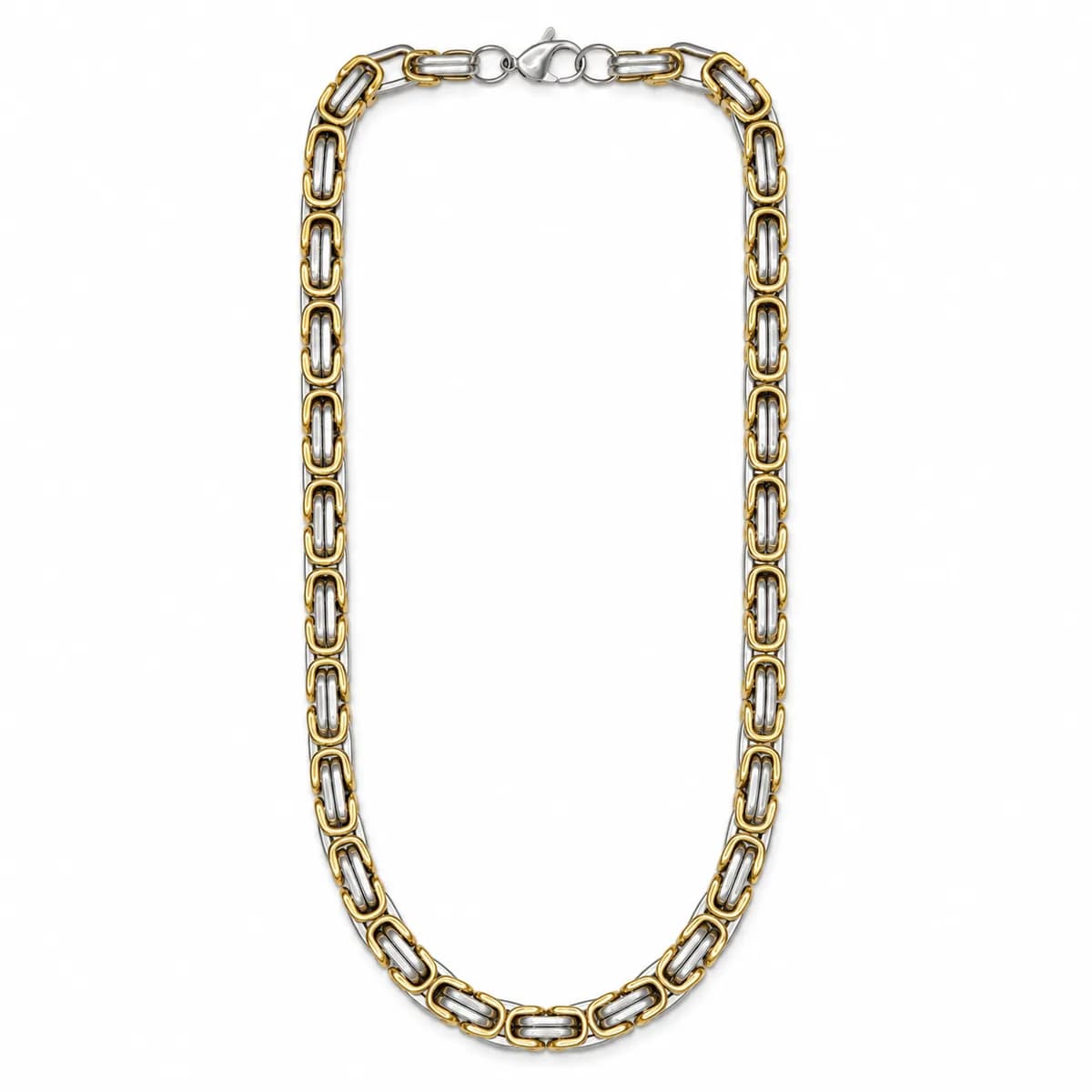
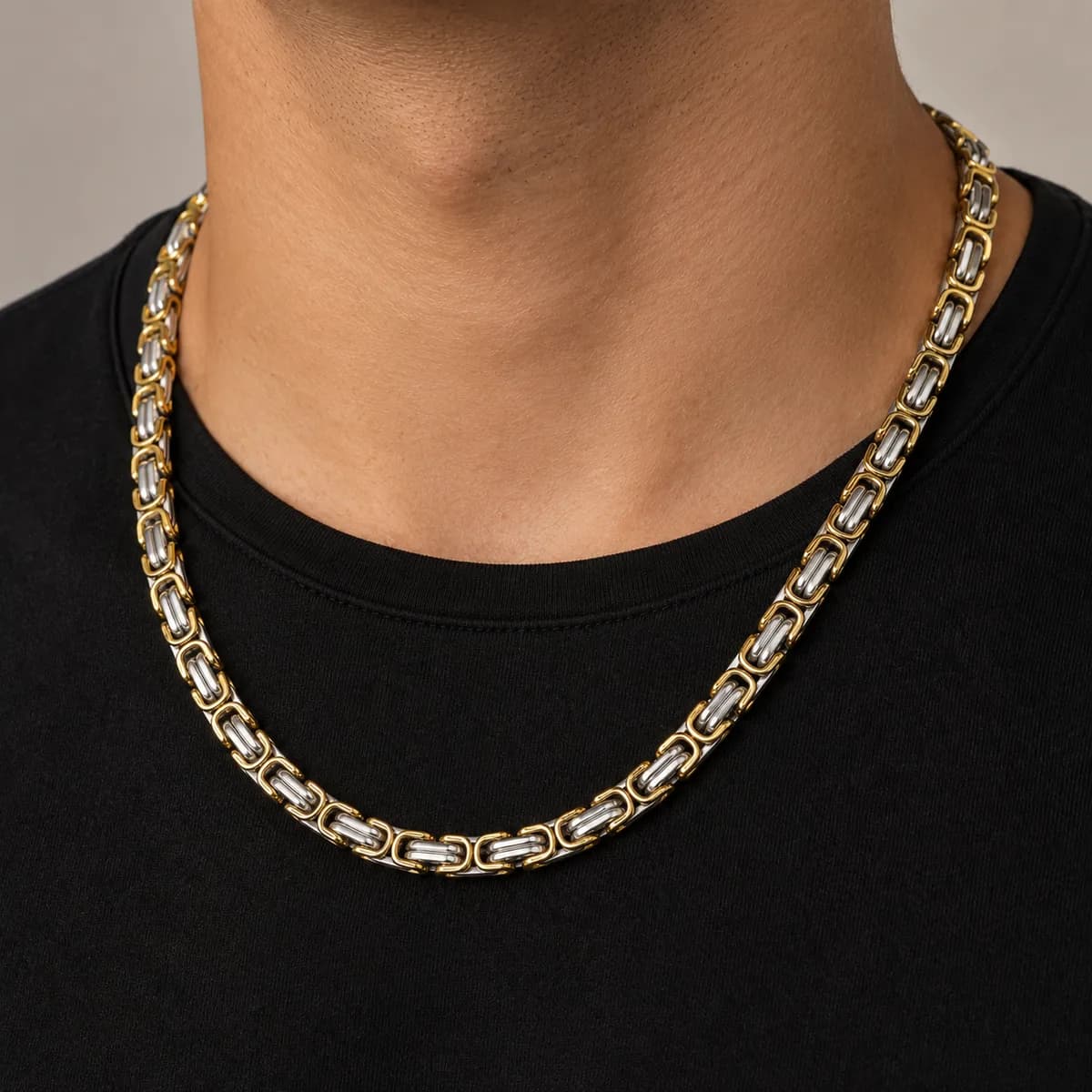
When we sell a gold-tone steel chain, that colour is almost always PVD — physical vapour deposition. The colour is fused into the surface of the steel in a vacuum chamber at high temperature rather than electroplated on in a bath.
Practically, PVD on steel lasts something like five to ten times longer than electroplating on brass, survives water, and does not expose a copper-rich base when it finally does wear. It costs more to produce and it cannot hit quite the same buttery yellow as real gold plate. That is the trade, and for a piece you intend to wear every day it is not a close call.
How to choose in about thirty seconds
Ask yourself one question: will this come off at night?
It never comes off — a chain you wear under a shirt daily, a ring you forget you have on, anything that goes to the gym. Buy steel. Buy PVD if you want gold tone. You will spend more once instead of three times.
It comes off after the event — a heavier statement piece, something matched to one outfit, a colour you are trying because it is having a moment. Gold plated is the sensible spend. Store it dry and it will outlast the trend.
It is a gift and you do not know their habits. Steel, every time. It is the option that cannot go wrong in someone else's hands.
What to look for on a product page
1The actual grade. “Stainless steel” is a family; 316L is the surgical grade that resists corrosion. If a listing will not say which, assume 201 or 304.
2Micron thickness, if it is plated. A seller who plates at 3 microns will tell you. Silence means flash plating.
3Clasp material. This is where corners get cut on otherwise good chains, and the clasp is the part that sits against the back of your neck all day.
4Weight in grams. A 55 cm steel curb chain that weighs 18 g and one that weighs 40 g are not the same product, whatever the photos suggest.
5Whether the colour is PVD or electroplated. Worth one message to the seller if it is not stated.
Cost per wear is the only number that matters. A Rs. 4,000 chain worn daily for four years costs about three rupees a day. A Rs. 1,200 one replaced every eight months costs more than that and annoys you four times.
Where we land
We build the everyday range — chains, cuffs, bands, the pieces people wear without thinking — in 316L with PVD colour. We keep plated pieces for the occasion end, where the finish only has to survive the evening and the look is the whole point. Most people's collections should probably be split the same way, weighted heavily toward the first group.
The PVD wrinkle, which is the part most people miss
When we sell a gold-tone steel chain, that colour is almost always PVD — physical vapour deposition. The colour is fused into the surface of the steel in a vacuum chamber at high temperature rather than electroplated on in a bath.
Practically, PVD on steel lasts something like five to ten times longer than electroplating on brass, survives water, and does not expose a copper-rich base when it finally does wear. It costs more to produce and it cannot hit quite the same buttery yellow as real gold plate. That is the trade, and for a piece you intend to wear every day it is not a close call.
How to choose in about thirty seconds
Ask yourself one question: will this come off at night?
It never comes off — a chain you wear under a shirt daily, a ring you forget you have on, anything that goes to the gym. Buy steel. Buy PVD if you want gold tone. You will spend more once instead of three times.
It comes off after the event — a heavier statement piece, something matched to one outfit, a colour you are trying because it is having a moment. Gold plated is the sensible spend. Store it dry and it will outlast the trend.
It is a gift and you do not know their habits. Steel, every time. It is the option that cannot go wrong in someone else's hands.
What to look for on a product page
1The actual grade. “Stainless steel” is a family; 316L is the surgical grade that resists corrosion. If a listing will not say which, assume 201 or 304.
2Micron thickness, if it is plated. A seller who plates at 3 microns will tell you. Silence means flash plating.
3Clasp material. This is where corners get cut on otherwise good chains, and the clasp is the part that sits against the back of your neck all day.
4Weight in grams. A 55 cm steel curb chain that weighs 18 g and one that weighs 40 g are not the same product, whatever the photos suggest.
5Whether the colour is PVD or electroplated. Worth one message to the seller if it is not stated.
Cost per wear is the only number that matters. A Rs. 4,000 chain worn daily for four years costs about three rupees a day. A Rs. 1,200 one replaced every eight months costs more than that and annoys you four times.
Where we land
We build the everyday range — chains, cuffs, bands, the pieces people wear without thinking — in 316L with PVD colour. We keep plated pieces for the occasion end, where the finish only has to survive the evening and the look is the whole point. Most people's collections should probably be split the same way, weighted heavily toward the first group.