Buying guide
Cuban, rope, figaro, box: what the chain names actually mean
Six names, six completely different chains. Most people buy on the photo and find out about the differences later.
Zayr Studio4 min read
Updated
Link style is the one chain decision people make purely on the photograph, and it is the one that determines whether the chain kinks, whether it holds a pendant straight, and whether it survives being caught on a car seatbelt. The names are not marketing — each one describes how the metal is actually joined, and that geometry decides everything.
The six you will actually be choosing between
Curb and Cuban
Flat, interlocking oval links that lie against each other. A Cuban link is a curb chain with thicker, more tightly packed links — the two names get used interchangeably and the difference is one of degree, not kind.
This is the default men's chain for good reason. It lies flat, it does not twist, it takes a pendant without rotating, and it is the strongest common style per gram because the links are wide where they bear load. If you are buying one chain and want to think about it as little as possible, buy this.
Rope
Small links twisted in pairs to form a spiral. It catches light from every angle, which is why it photographs better than anything else on this list and why it has been the wedding-season default here for decades.
The catch: rope chains have more joints than any other style, so a cheap one has more places to fail. A well-made rope is excellent. A poorly-made rope is the chain most likely to break at the worst moment.
Figaro
A repeating pattern of three short links and one long one. It reads as slightly more decorative than curb without becoming ornate, and it hits a middle ground that a lot of men in their thirties and forties settle on. Strong, flat, and slightly more interesting than plain curb.
Box
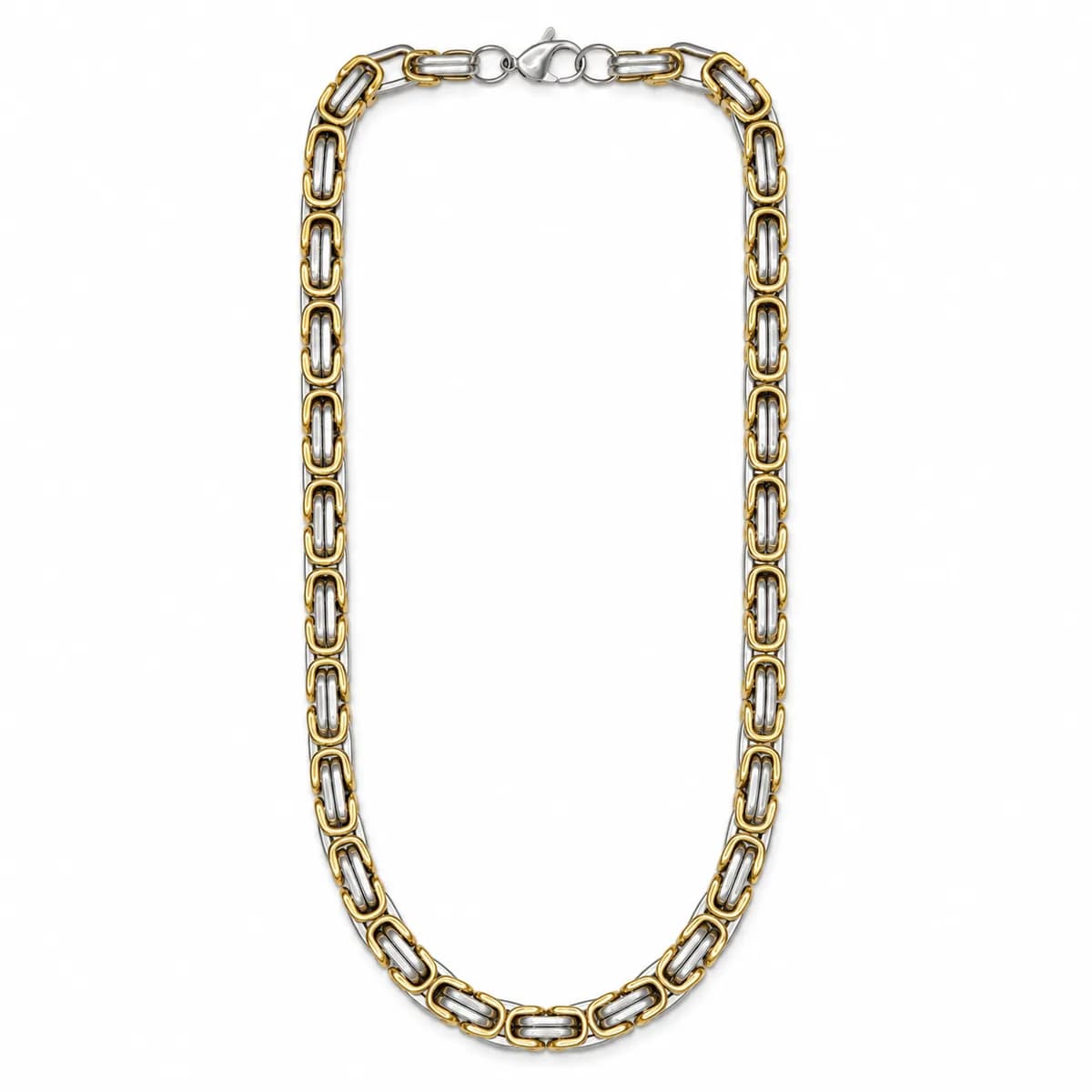
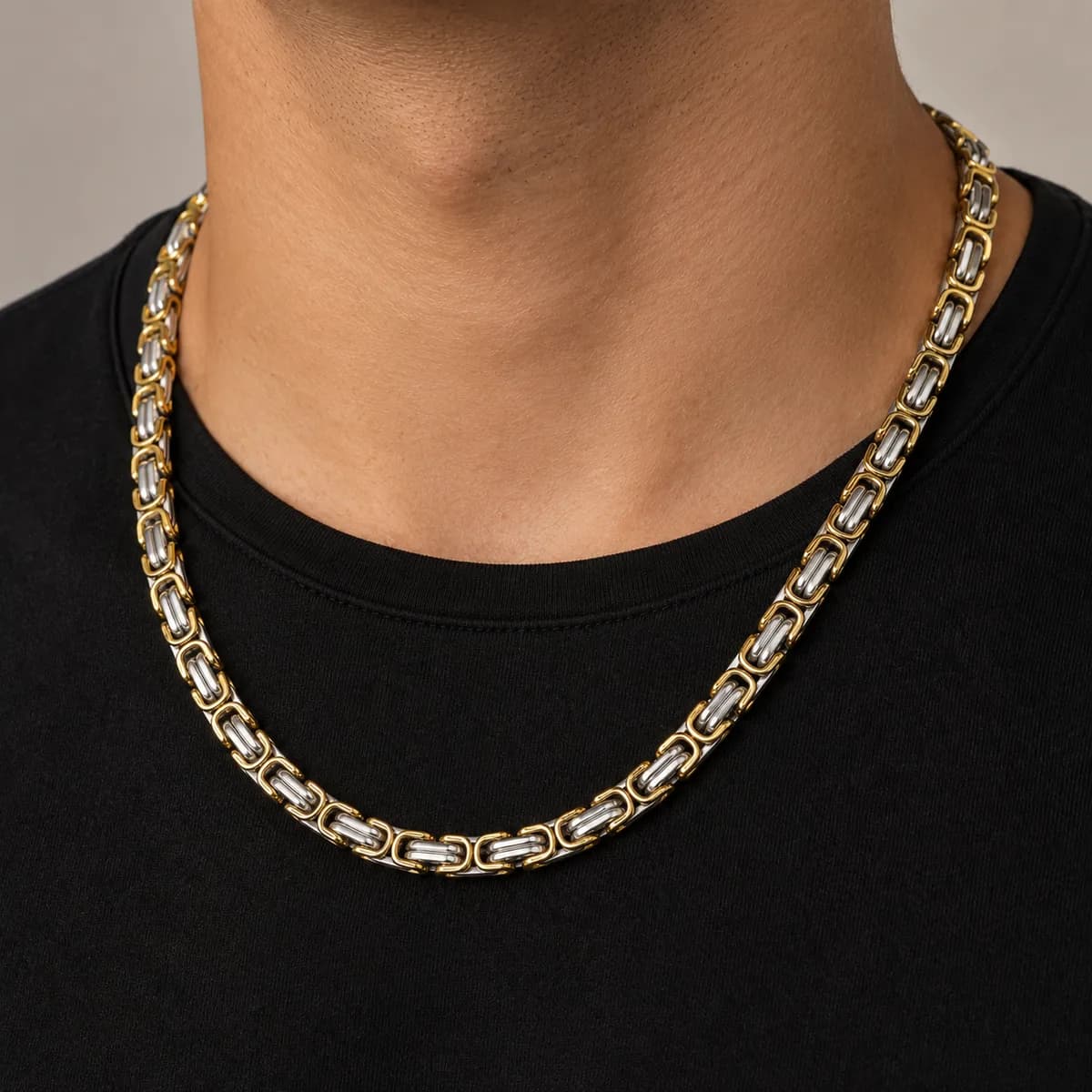
Square links joined end to end, forming a smooth continuous cord. Clean, modern, understated, and the best of the common styles at holding a pendant dead centre because the links do not rotate independently.
Its weakness is that a sharp bend can kink it permanently, and a kinked box chain cannot be straightened out. Fine on a neck; do not stuff one in a pocket.
Snake
Tightly fitted plates forming a smooth, flexible tube with almost no visible links. Very sleek, very good under a collar, and the most fragile thing on this list. One kink is permanent and repairs are effectively impossible. Beautiful, and not a chain to wear to the gym.
Common questions
Which chain style is strongest?
Curb and Cuban links, followed closely by Franco and wheat. Their links are wide where they carry load and they cannot kink. Rope chains can be very strong when well made, but they have far more joints, so quality matters more with rope than with any other style.
What is the difference between a curb chain and a Cuban chain?
They are the same construction — interlocking flat oval links. Cuban simply refers to a curb chain with thicker, more tightly packed links and a more substantial look. The distinction is one of proportion rather than a different way of joining metal.
Which chain is best for wearing a pendant?
A box or curb chain. Both keep a pendant facing forward instead of letting it rotate to the side, and both have the strength to carry weight. Avoid hanging a heavy pendant on a snake chain — it stretches the plates and the damage is permanent.
What chain style should I buy first?
A 4–5 mm curb chain at 55 cm. It lies flat, does not kink, takes a pendant, works with an open collar and suits nearly every frame. It is the chain you will still be wearing after you have bought three others.
Ready when you are
Bank or wallet payment nationwide, exchanges on sizing.