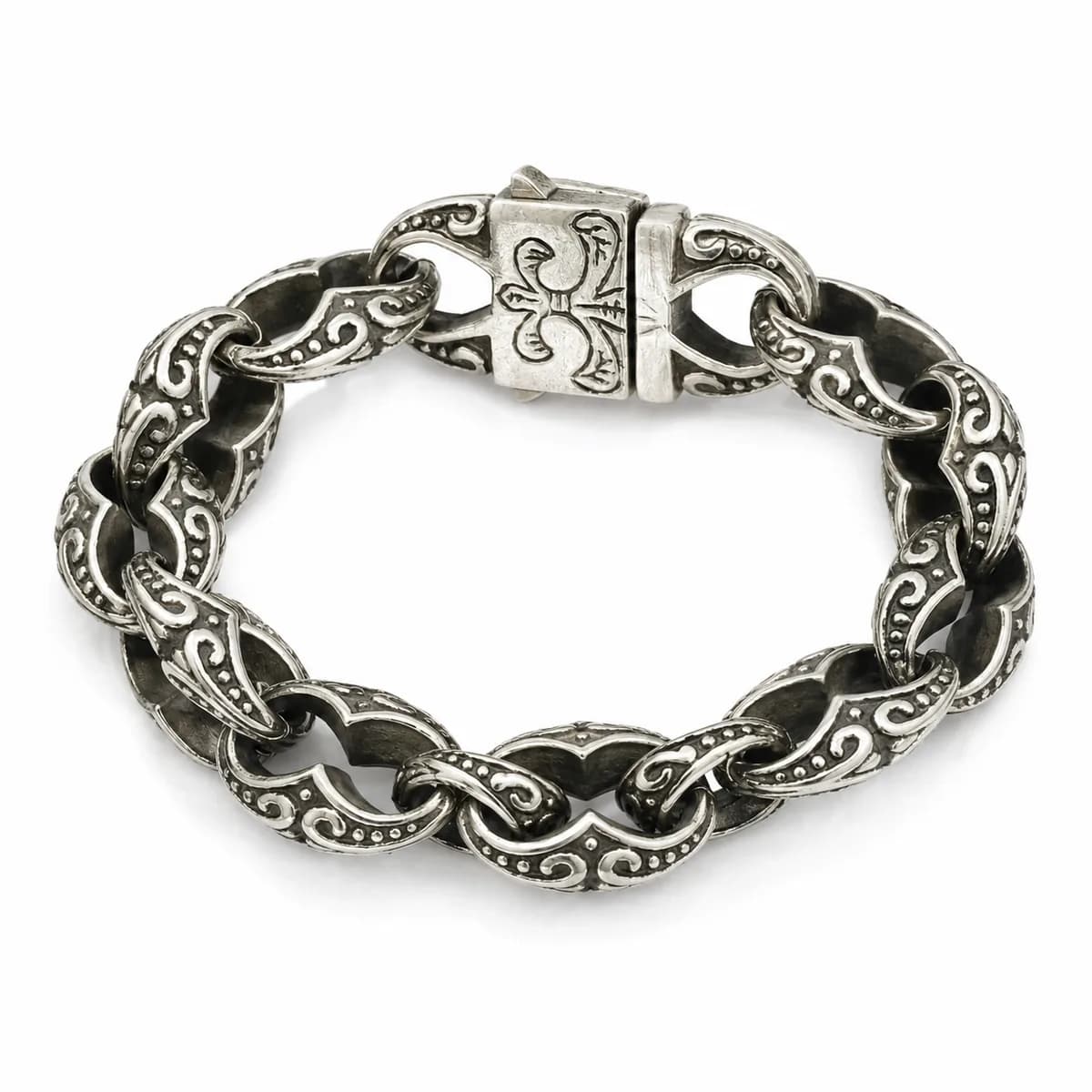
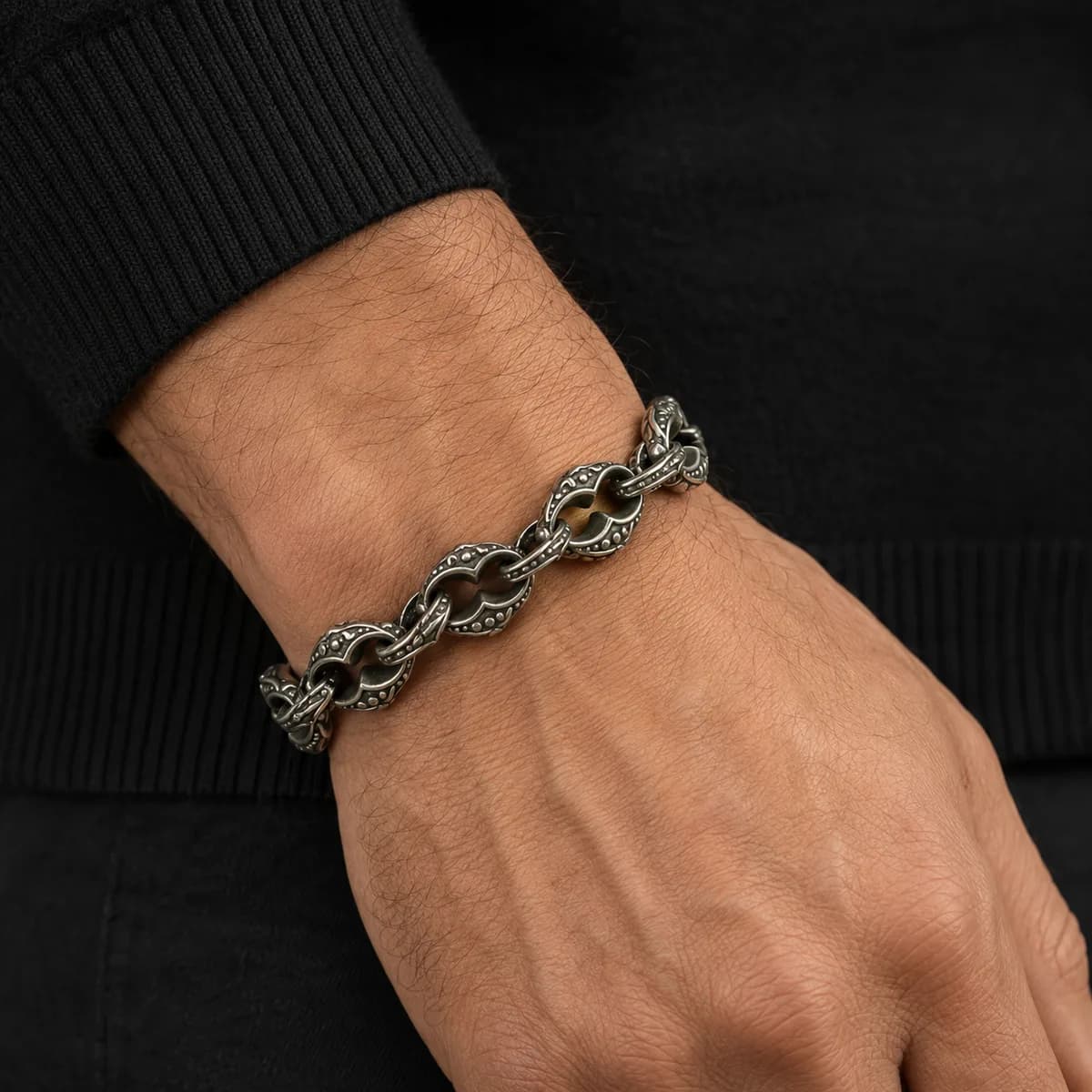
Why two chains that look identical cost Rs. 900 and Rs. 4,500
Same photo, same description, five times the price. The difference is real, and most of it is measurable.
Zayr Studio··4 min read
Updated
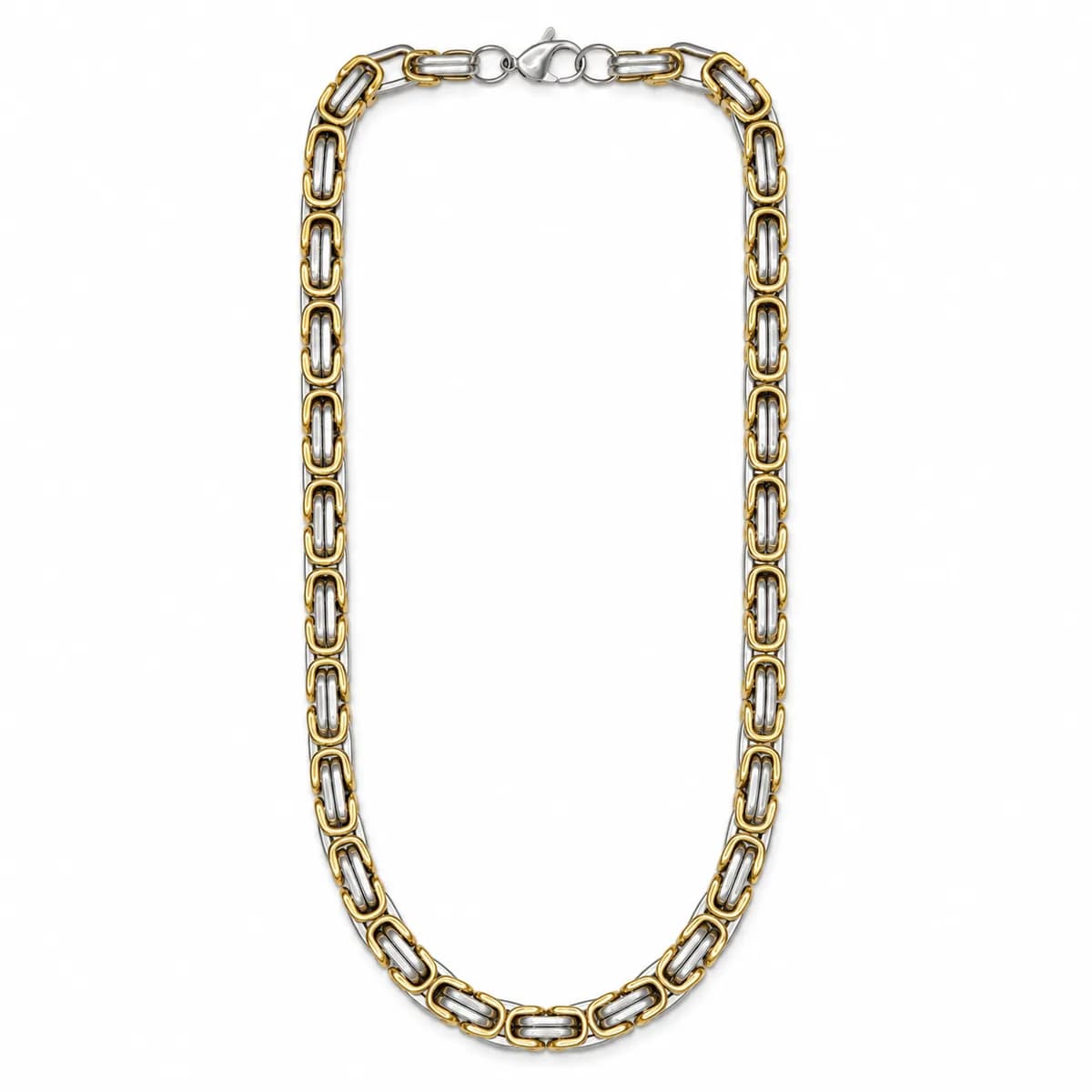
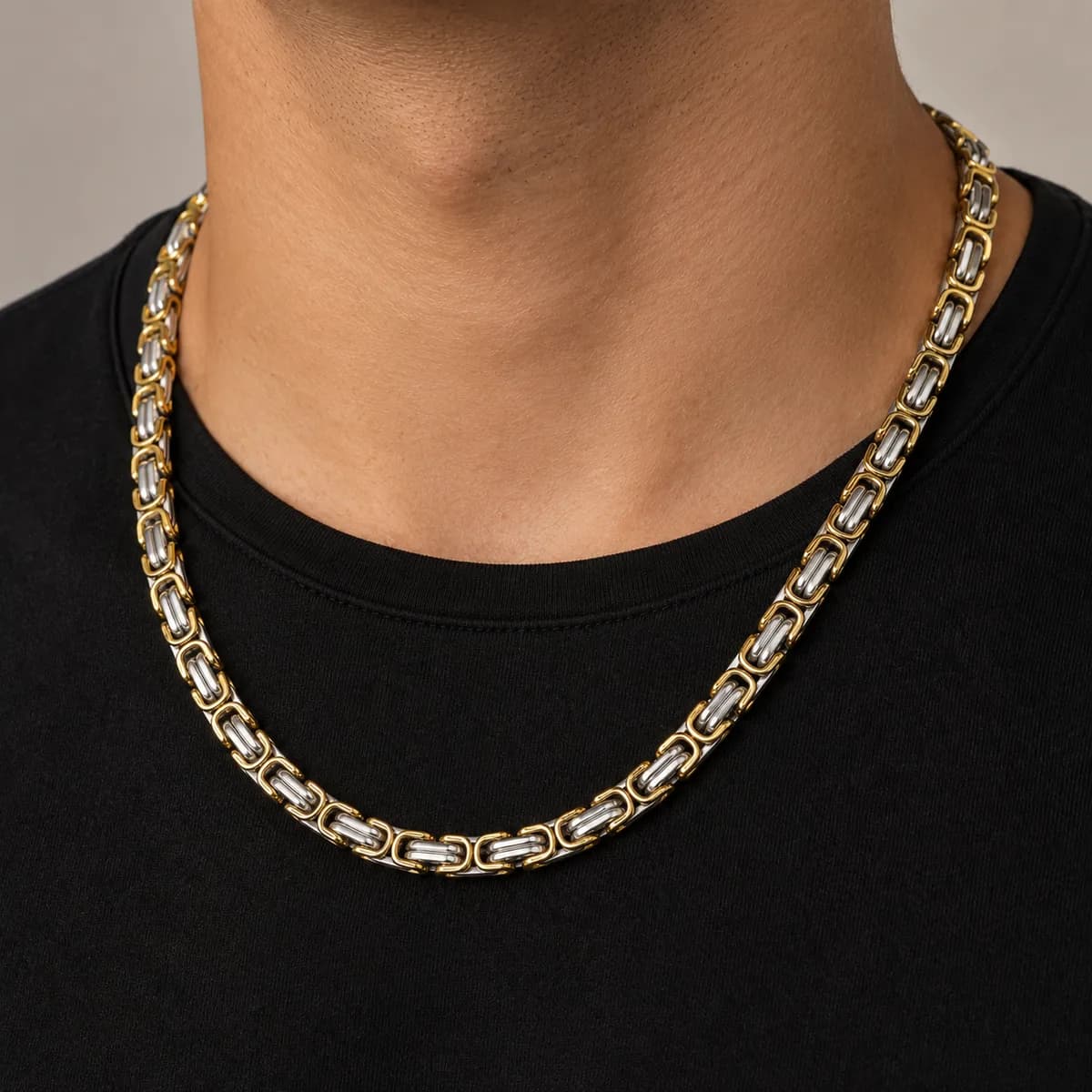
Put two men's curb chains side by side in photographs and you cannot tell them apart. One is Rs. 900, one is Rs. 4,500. Both descriptions say stainless steel. Somebody is being robbed, and it is not always obvious who.
Here is where the money actually goes, in rough order of how much it moves the number.
1. Weight, which is most of it
Metal is sold by the kilogram and jewellery is made of metal. A 55 cm curb chain can weigh 15 grams or 45 grams and look broadly similar in a photograph shot from a metre away. In the hand they are entirely different objects — one feels like a keyring, one has heft.
This is the single biggest reason for price gaps within the same material, and it is why a listing that does not state grams is hiding something. Hollow links are the specific version of this trick: a hollow 6 mm chain and a solid 6 mm chain measure the same and weigh a third as much. Hollow also dents permanently the first time it catches on something.
2. The actual alloy
Material
Rough cost position
How to tell
201 / 304 steel
Cheapest
Spots and corrodes at the clasp within months, especially near the coast
316L steel
About 2–3× the above
Stays clean in sweat and water. Should be stated explicitly
Brass, gold plated
Cheap base, cost is in plating
Warmer colour, lighter weight, magnet does nothing
Common questions
Why is stainless steel jewellery so expensive compared to plated pieces?
Because you are buying solid metal rather than a coating over a cheap base. 316L steel costs two to three times more per kilogram than the low grades, weighs more per piece, and a PVD colour finish needs vacuum equipment that electroplating does not. The finish is also permanent rather than temporary.
How much should a men's chain cost in Pakistan?
A solid 316L steel chain at 4–5 mm and 55 cm sits fairly between Rs. 1,800 and Rs. 4,500 depending on weight and finish. Much below that usually means a lower steel grade, hollow links or flash plating. Gold-plated brass runs cheaper, from around Rs. 900.
Does a heavier chain mean better quality?
Within the same material and style, yes — weight is the closest thing to an objective quality measure, because metal is sold by the kilogram and hollow links are the usual way to cut cost. Across different materials it tells you nothing, since steel and brass have different densities.
Is expensive jewellery always better?
No. Above the fair range you are typically paying for brand, design or a precious metal rather than durability. A well-made 316L steel piece outlasts plated gold at several times the price. Judge by material, weight and finishing rather than by the number itself.
Ready when you are
Bank or wallet payment nationwide, exchanges on sizing.
Why two chains that look identical cost Rs. 900 and Rs. 4,500
Same photo, same description, five times the price. The difference is real, and most of it is measurable.
Zayr Studio··4 min read
Updated
Put two men's curb chains side by side in photographs and you cannot tell them apart. One is Rs. 900, one is Rs. 4,500. Both descriptions say stainless steel. Somebody is being robbed, and it is not always obvious who.
Here is where the money actually goes, in rough order of how much it moves the number.
1. Weight, which is most of it
Metal is sold by the kilogram and jewellery is made of metal. A 55 cm curb chain can weigh 15 grams or 45 grams and look broadly similar in a photograph shot from a metre away. In the hand they are entirely different objects — one feels like a keyring, one has heft.
This is the single biggest reason for price gaps within the same material, and it is why a listing that does not state grams is hiding something. Hollow links are the specific version of this trick: a hollow 6 mm chain and a solid 6 mm chain measure the same and weigh a third as much. Hollow also dents permanently the first time it catches on something.
2. The actual alloy
Material
Rough cost position
How to tell
201 / 304 steel
Cheapest
Spots and corrodes at the clasp within months, especially near the coast
316L steel
About 2–3× the above
Stays clean in sweat and water. Should be stated explicitly
Brass, gold plated
Cheap base, cost is in plating
Warmer colour, lighter weight, magnet does nothing
Common questions
Why is stainless steel jewellery so expensive compared to plated pieces?
Because you are buying solid metal rather than a coating over a cheap base. 316L steel costs two to three times more per kilogram than the low grades, weighs more per piece, and a PVD colour finish needs vacuum equipment that electroplating does not. The finish is also permanent rather than temporary.
How much should a men's chain cost in Pakistan?
A solid 316L steel chain at 4–5 mm and 55 cm sits fairly between Rs. 1,800 and Rs. 4,500 depending on weight and finish. Much below that usually means a lower steel grade, hollow links or flash plating. Gold-plated brass runs cheaper, from around Rs. 900.
Does a heavier chain mean better quality?
Within the same material and style, yes — weight is the closest thing to an objective quality measure, because metal is sold by the kilogram and hollow links are the usual way to cut cost. Across different materials it tells you nothing, since steel and brass have different densities.
Is expensive jewellery always better?
No. Above the fair range you are typically paying for brand, design or a precious metal rather than durability. A well-made 316L steel piece outlasts plated gold at several times the price. Judge by material, weight and finishing rather than by the number itself.
Ready when you are
Bank or wallet payment nationwide, exchanges on sizing.
Within steel alone, the grade difference is a two-to-threefold change in raw cost. It is invisible on day one and extremely visible after a Karachi summer — which is the whole reason the grade number matters rather than the word stainless.
3. How the colour got there
A gold-tone finish can be electroplating at half a micron, electroplating at three microns, or PVD fused into the steel in a vacuum chamber. The first costs almost nothing and lasts months. The third requires a machine that costs more than most small workshops earn in a year, and lasts years.
Two identical-looking gold chains where one is flash-plated brass and the other is PVD steel is the most common version of the Rs. 900 versus Rs. 4,500 gap. Both are honest products at their price. Only one of them is still gold-coloured next Eid.
4. The clasp and the finishing
Clasps are where corners get cut invisibly. A cheap lobster clasp on a good chain fails within a year and takes the chain with it. It is a small part of the cost and the entire risk of loss.
Solder joints on each link, versus links pressed closed. Pressed links open under load. You find out when the chain is on a road somewhere.
Polishing time. Getting a mirror finish is labour, and labour is real money. Cheap pieces are tumbled briefly and show fine scratches from new.
Edge finishing on rings. A band that has been properly finished has no sharp inner edge. This is entirely about how many minutes someone spent on it.
5. What the seller is carrying
Some of the difference has nothing to do with the piece. A seller who holds stock, ships on COD, funds the courier for three weeks, and honours exchanges is carrying costs a dropshipper who forwards your order to a wholesaler is not.
That is a genuine value difference — it is the difference between a size exchange taking four days and taking never — but it is worth being clear that you are paying for a service level, not for better metal. And it is also where dishonest markup hides. There is no way to tell these apart from a product page, which is what reputation is for.
What a fair price looks like
Piece
Fair range (PKR)
Below this, expect
316L steel chain, 4–5 mm, 55 cm
1,800 – 4,500
Thin plating on 201 steel, or a hollow chain
Steel bracelet or cuff
1,200 – 3,500
A weak clasp and a light gauge
Steel ring, plain band
800 – 2,000
Rough inner edges
Gold-plated brass chain
900 – 3,000
Flash plating measured in months
925 silver ring
2,500 – 8,000
Silver-plated brass sold as silver
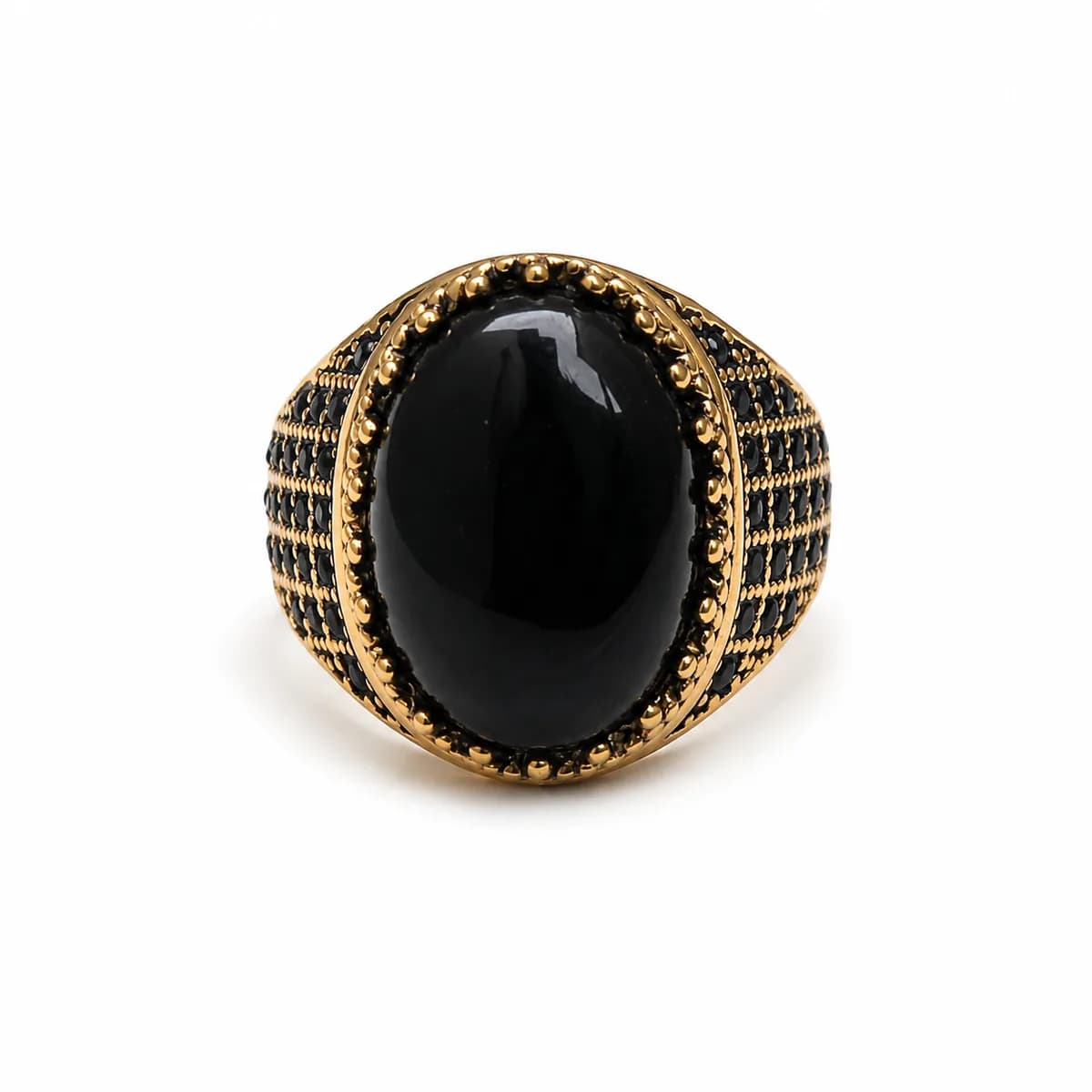
Ring with a zirconia stone
1,500 – 4,000
Glued settings that drop the stone
Above these ranges you are usually paying for brand, design or a precious metal. Below them, something has been substituted. Neither is automatically wrong — just know which one is happening.
Divide the price by the number of days you will wear it. On that measure the cheap chain is almost always the expensive one.
Within steel alone, the grade difference is a two-to-threefold change in raw cost. It is invisible on day one and extremely visible after a Karachi summer — which is the whole reason the grade number matters rather than the word stainless.
3. How the colour got there
A gold-tone finish can be electroplating at half a micron, electroplating at three microns, or PVD fused into the steel in a vacuum chamber. The first costs almost nothing and lasts months. The third requires a machine that costs more than most small workshops earn in a year, and lasts years.
Two identical-looking gold chains where one is flash-plated brass and the other is PVD steel is the most common version of the Rs. 900 versus Rs. 4,500 gap. Both are honest products at their price. Only one of them is still gold-coloured next Eid.
4. The clasp and the finishing
Clasps are where corners get cut invisibly. A cheap lobster clasp on a good chain fails within a year and takes the chain with it. It is a small part of the cost and the entire risk of loss.
Solder joints on each link, versus links pressed closed. Pressed links open under load. You find out when the chain is on a road somewhere.
Polishing time. Getting a mirror finish is labour, and labour is real money. Cheap pieces are tumbled briefly and show fine scratches from new.
Edge finishing on rings. A band that has been properly finished has no sharp inner edge. This is entirely about how many minutes someone spent on it.
5. What the seller is carrying
Some of the difference has nothing to do with the piece. A seller who holds stock, ships on COD, funds the courier for three weeks, and honours exchanges is carrying costs a dropshipper who forwards your order to a wholesaler is not.
That is a genuine value difference — it is the difference between a size exchange taking four days and taking never — but it is worth being clear that you are paying for a service level, not for better metal. And it is also where dishonest markup hides. There is no way to tell these apart from a product page, which is what reputation is for.
What a fair price looks like
Piece
Fair range (PKR)
Below this, expect
316L steel chain, 4–5 mm, 55 cm
1,800 – 4,500
Thin plating on 201 steel, or a hollow chain
Steel bracelet or cuff
1,200 – 3,500
A weak clasp and a light gauge
Steel ring, plain band
800 – 2,000
Rough inner edges
Gold-plated brass chain
900 – 3,000
Flash plating measured in months
925 silver ring
2,500 – 8,000
Silver-plated brass sold as silver
Ring with a zirconia stone
1,500 – 4,000
Glued settings that drop the stone
Above these ranges you are usually paying for brand, design or a precious metal. Below them, something has been substituted. Neither is automatically wrong — just know which one is happening.
Divide the price by the number of days you will wear it. On that measure the cheap chain is almost always the expensive one.