Why jewellery turns your skin green — and how to stop it
It is not a sign you have been cheated. It is copper, sweat and a bit of chemistry — and it is mostly preventable.
Zayr Studio··5 min read
Updated
Someone messages us about this roughly once a week, usually with a photo of a wrist and the same three words: “is it fake?” Almost always, no. The green is chemistry, and it happens to metal at every price. It happens under 22k gold rings in Lahore in August. It happens under wedding bands people have worn for thirty years.
Here is what is going on, and what you can do about it without giving up on the piece.
What the green mark actually is
Pure gold and pure silver are too soft to make into anything you could wear daily — a ring in pure gold would go oval in a month. So they get alloyed, and the most common alloying metal is copper. Copper is also what most jewellery bases are made from before plating.
When copper meets moisture and a little acid, it oxidises into copper salts. Those salts are green. Your sweat is mildly acidic, and it gets more acidic when you are dehydrated, when you have been eating a lot of salt, or when you have just come off a run. The salts transfer to your skin, which is porous and happy to hold a stain for a day. That is the whole mechanism.
Why it happens to some people and not others
Two people can wear the identical chain and only one goes green. The variables are less about the metal than most people assume:
Skin pH. The single biggest factor. More acidic skin strips plating and oxidises copper faster.
How much you sweat, and where. Wrists and necks in a Lahore summer are a much harder test than earlobes.
Common questions
Does real gold turn your skin green?
It can, if it is low karat. 9k and 10k gold contain a lot of copper, and copper is what reacts. At 18k and above there is little enough copper that marking is rare. So a green finger is not proof a piece is fake — it is a hint about the alloy, not the authenticity.
Does stainless steel jewellery turn skin green?
316L stainless steel does not. There is no meaningful copper in the alloy, and it does not oxidise the way brass or sterling silver does. It is the most reliable choice if you want to wear something daily without thinking about it.
Is the green mark dangerous?
No. Copper salts on the skin are harmless and wash off with soap and water. If you have itching, redness or a rash rather than a stain, that is likely a nickel allergy and you should stop wearing the piece.
Will clear nail polish really stop it?
Yes, for about a month at a time. A thin coat on the surface that touches skin puts a barrier between the metal and your sweat. Reapply when it starts flaking. It is a workaround rather than a fix, but it is a genuinely effective one.
Ready when you are
Bank or wallet payment nationwide, exchanges on sizing.
Why jewellery turns your skin green — and how to stop it
It is not a sign you have been cheated. It is copper, sweat and a bit of chemistry — and it is mostly preventable.
Zayr Studio··5 min read
Updated
Someone messages us about this roughly once a week, usually with a photo of a wrist and the same three words: “is it fake?” Almost always, no. The green is chemistry, and it happens to metal at every price. It happens under 22k gold rings in Lahore in August. It happens under wedding bands people have worn for thirty years.
Here is what is going on, and what you can do about it without giving up on the piece.
What the green mark actually is
Pure gold and pure silver are too soft to make into anything you could wear daily — a ring in pure gold would go oval in a month. So they get alloyed, and the most common alloying metal is copper. Copper is also what most jewellery bases are made from before plating.
When copper meets moisture and a little acid, it oxidises into copper salts. Those salts are green. Your sweat is mildly acidic, and it gets more acidic when you are dehydrated, when you have been eating a lot of salt, or when you have just come off a run. The salts transfer to your skin, which is porous and happy to hold a stain for a day. That is the whole mechanism.
Why it happens to some people and not others
Two people can wear the identical chain and only one goes green. The variables are less about the metal than most people assume:
Skin pH. The single biggest factor. More acidic skin strips plating and oxidises copper faster.
How much you sweat, and where. Wrists and necks in a Lahore summer are a much harder test than earlobes.
Common questions
Does real gold turn your skin green?
It can, if it is low karat. 9k and 10k gold contain a lot of copper, and copper is what reacts. At 18k and above there is little enough copper that marking is rare. So a green finger is not proof a piece is fake — it is a hint about the alloy, not the authenticity.
Does stainless steel jewellery turn skin green?
316L stainless steel does not. There is no meaningful copper in the alloy, and it does not oxidise the way brass or sterling silver does. It is the most reliable choice if you want to wear something daily without thinking about it.
Is the green mark dangerous?
No. Copper salts on the skin are harmless and wash off with soap and water. If you have itching, redness or a rash rather than a stain, that is likely a nickel allergy and you should stop wearing the piece.
Will clear nail polish really stop it?
Yes, for about a month at a time. A thin coat on the surface that touches skin puts a barrier between the metal and your sweat. Reapply when it starts flaking. It is a workaround rather than a fix, but it is a genuinely effective one.
Ready when you are
Bank or wallet payment nationwide, exchanges on sizing.
Lotion, perfume and hand sanitiser. Alcohol and acids in these eat plating quickly — sanitiser is the one that surprises people, because we all use it ten times a day now.
Medication. Some of it changes sweat chemistry enough to make a previously fine ring start marking.
How thin the plating is. A 0.5 micron flash of gold over brass will wear through in weeks. Three microns lasts years.
Which metals do not do this
If you want to stop thinking about it entirely, the metal choice matters more than anything else you can do. If you are weighing steel against a plated piece, the comparison is worth reading before you spend.
Metal
Turns skin green?
Worth knowing
316L stainless steel
No
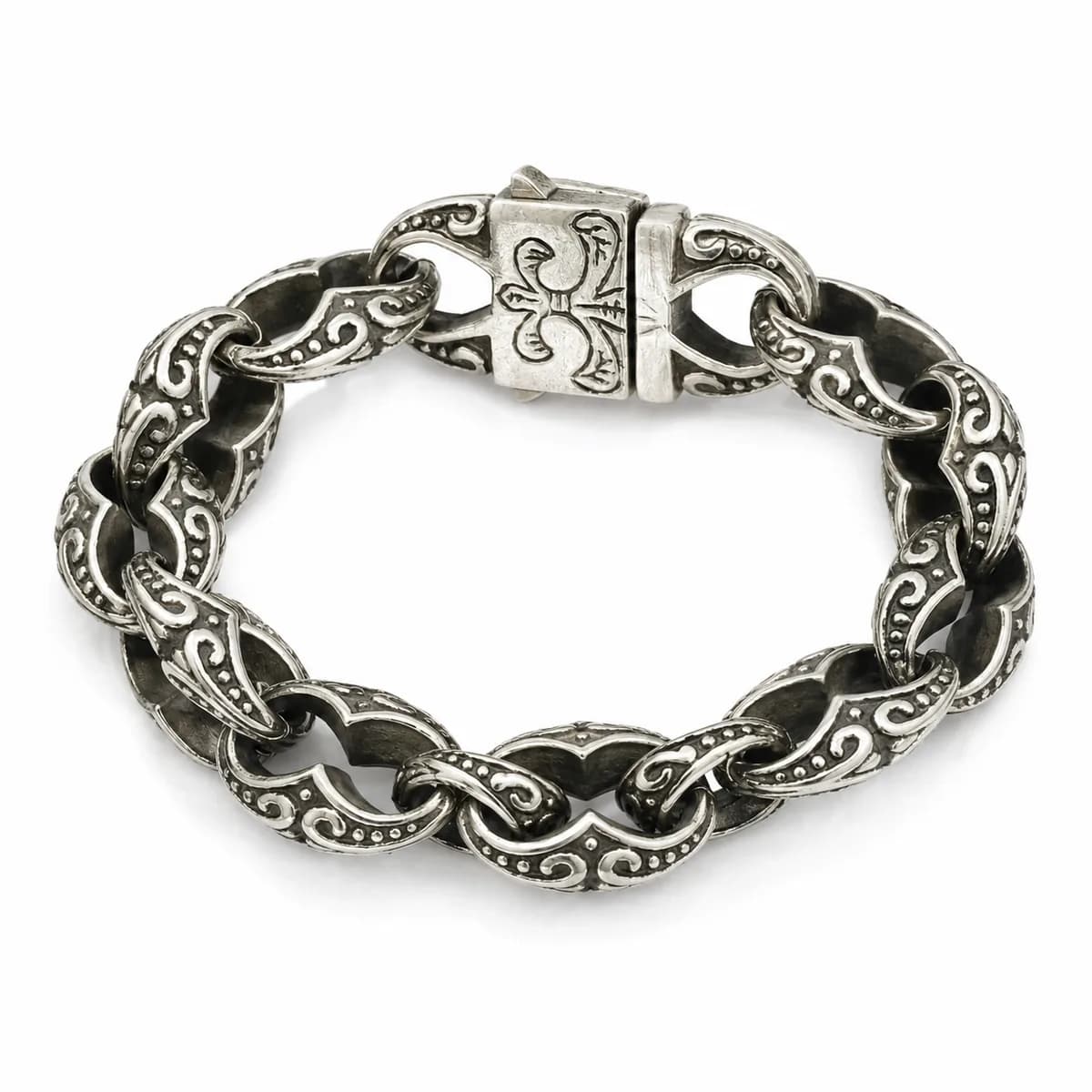
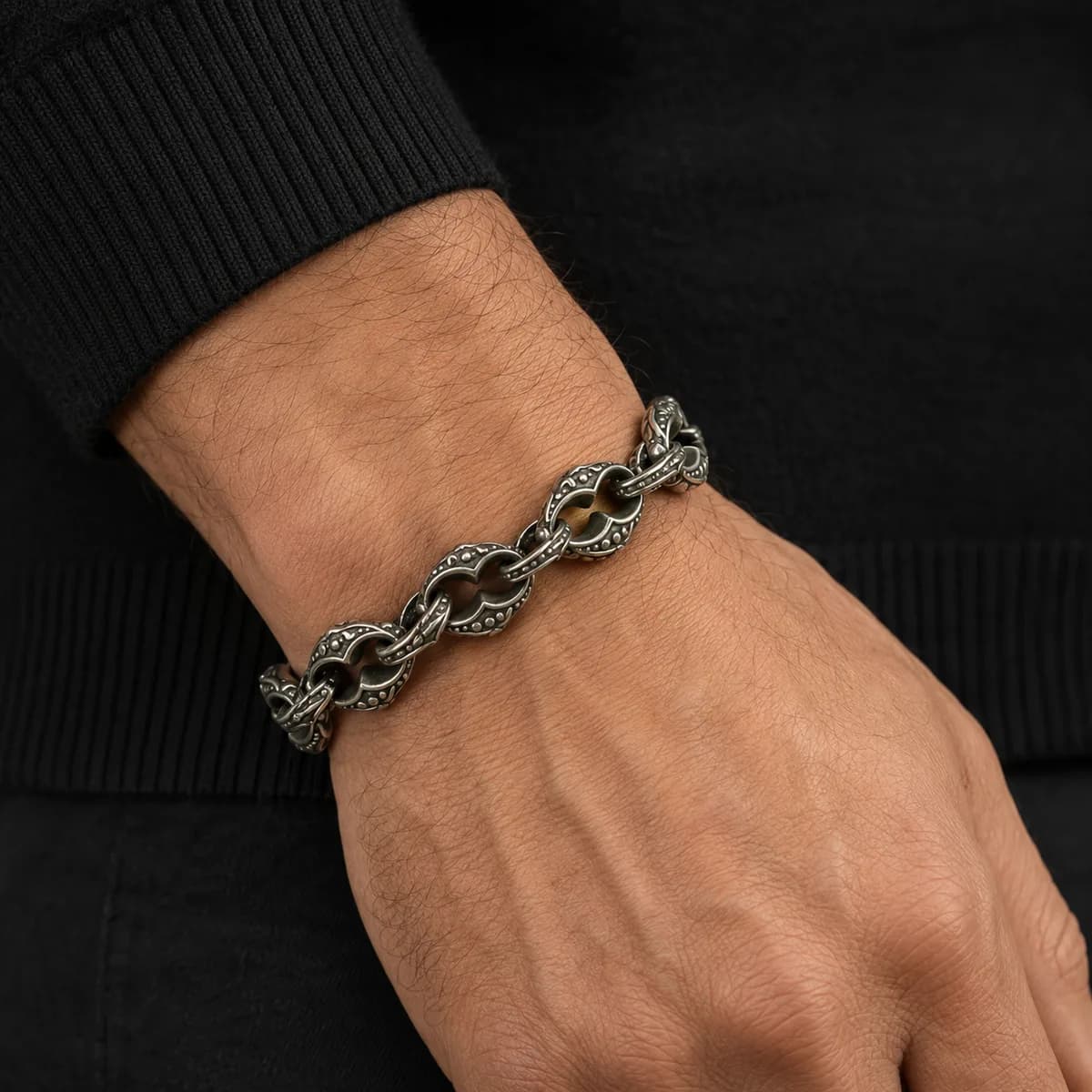
No copper in the alloy worth mentioning. Shower in it, swim in it, sleep in it. This is what most of our men's chains and bracelets are made from.
Titanium
No
Lightest option and completely inert. Hard to resize, so measure carefully.
Solid gold, 18k and up
Rarely
Enough gold in the alloy that there is little copper left to react. 9k and 10k are much more likely to mark.
925 sterling silver
Sometimes
7.5% copper by definition. It tarnishes black before it marks green, so you usually get a warning.
Gold-plated brass
Eventually
Fine while the plating holds. The green starts the day the plating wears through, usually at the clasp or the inside of a ring.
Copper and bronze
Yes, quickly
This is the point of them for some people. Not for everyday jewellery.
This is most of the reason our everyday men's range is built on 316L steel rather than plated brass. It costs us more per piece and it removes the single most common complaint in the category. That trade is easy.
Five fixes that actually work
1Put jewellery on last. After the shower, after the lotion, after the perfume, after the deodorant. It sounds trivial. It is the highest-impact habit on this list.
2Take it off before the gym and before wudu. Repeated soaking plus salt is what kills plating. Two minutes of inconvenience buys you years.
3Wipe it down at night. A dry microfibre cloth, ten seconds. You are removing the sweat film before it has eight hours to sit there.
4Seal the contact side. A thin coat of clear nail polish on the inside of a ring band or the back of a pendant is genuinely effective. It lasts about a month, then redo it. Jewellers dislike this advice; it works.
5Keep it dry between wears. A zip pouch with the silica sachet that came in your last shoebox does more than a velvet-lined box left open on a humid dresser.
If it itches, that is a different problem
A green stain is cosmetic. A nickel allergy is not. Around one in ten people react to nickel, and the reaction looks like a patch of dry, itchy, sometimes weeping skin exactly where the metal sat, showing up 12 to 48 hours after contact rather than immediately.
Nickel is in a lot of cheap alloys and in some white gold. If that is you, stay on 316L steel, titanium, or solid gold from 18k up, and check clasps and earring posts specifically — they are the parts that get made from whatever was cheap, even on otherwise decent pieces.
How to clean a piece that has already marked
Warm water, a drop of dish soap, a soft toothbrush, thirty seconds. Rinse properly and dry it completely — a piece put away damp is a piece that tarnishes. That is it. Skip the toothpaste trick you have seen on TikTok; it is abrasive enough to scratch plating and polish, and it will make a shiny piece cloudy in a few goes.
For your skin: soap and water, or rubbing alcohol if you are impatient. It lifts straight off.
The pieces people still wear five years later are almost never the most expensive ones. They are the ones made from a metal that forgave being worn every single day.
Lotion, perfume and hand sanitiser. Alcohol and acids in these eat plating quickly — sanitiser is the one that surprises people, because we all use it ten times a day now.
Medication. Some of it changes sweat chemistry enough to make a previously fine ring start marking.
How thin the plating is. A 0.5 micron flash of gold over brass will wear through in weeks. Three microns lasts years.
Which metals do not do this
If you want to stop thinking about it entirely, the metal choice matters more than anything else you can do. If you are weighing steel against a plated piece, the comparison is worth reading before you spend.
Metal
Turns skin green?
Worth knowing
316L stainless steel
No
No copper in the alloy worth mentioning. Shower in it, swim in it, sleep in it. This is what most of our men's chains and bracelets are made from.
Titanium
No
Lightest option and completely inert. Hard to resize, so measure carefully.
Solid gold, 18k and up
Rarely
Enough gold in the alloy that there is little copper left to react. 9k and 10k are much more likely to mark.
925 sterling silver
Sometimes
7.5% copper by definition. It tarnishes black before it marks green, so you usually get a warning.
Gold-plated brass
Eventually
Fine while the plating holds. The green starts the day the plating wears through, usually at the clasp or the inside of a ring.
Copper and bronze
Yes, quickly
This is the point of them for some people. Not for everyday jewellery.
This is most of the reason our everyday men's range is built on 316L steel rather than plated brass. It costs us more per piece and it removes the single most common complaint in the category. That trade is easy.
Five fixes that actually work
1Put jewellery on last. After the shower, after the lotion, after the perfume, after the deodorant. It sounds trivial. It is the highest-impact habit on this list.
2Take it off before the gym and before wudu. Repeated soaking plus salt is what kills plating. Two minutes of inconvenience buys you years.
3Wipe it down at night. A dry microfibre cloth, ten seconds. You are removing the sweat film before it has eight hours to sit there.
4Seal the contact side. A thin coat of clear nail polish on the inside of a ring band or the back of a pendant is genuinely effective. It lasts about a month, then redo it. Jewellers dislike this advice; it works.
5Keep it dry between wears. A zip pouch with the silica sachet that came in your last shoebox does more than a velvet-lined box left open on a humid dresser.
If it itches, that is a different problem
A green stain is cosmetic. A nickel allergy is not. Around one in ten people react to nickel, and the reaction looks like a patch of dry, itchy, sometimes weeping skin exactly where the metal sat, showing up 12 to 48 hours after contact rather than immediately.
Nickel is in a lot of cheap alloys and in some white gold. If that is you, stay on 316L steel, titanium, or solid gold from 18k up, and check clasps and earring posts specifically — they are the parts that get made from whatever was cheap, even on otherwise decent pieces.
How to clean a piece that has already marked
Warm water, a drop of dish soap, a soft toothbrush, thirty seconds. Rinse properly and dry it completely — a piece put away damp is a piece that tarnishes. That is it. Skip the toothpaste trick you have seen on TikTok; it is abrasive enough to scratch plating and polish, and it will make a shiny piece cloudy in a few goes.
For your skin: soap and water, or rubbing alcohol if you are impatient. It lifts straight off.
The pieces people still wear five years later are almost never the most expensive ones. They are the ones made from a metal that forgave being worn every single day.